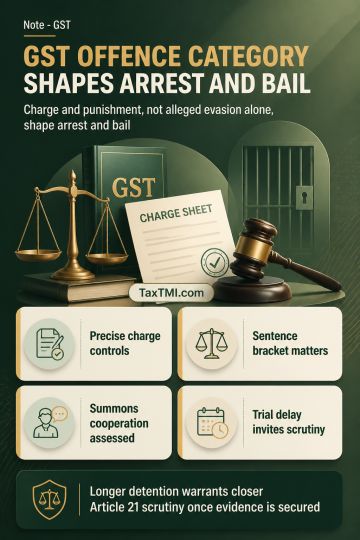
GST offence classification determines whether arrest and bail restrictions apply, while continued custody requires an individualised necessity assessm...
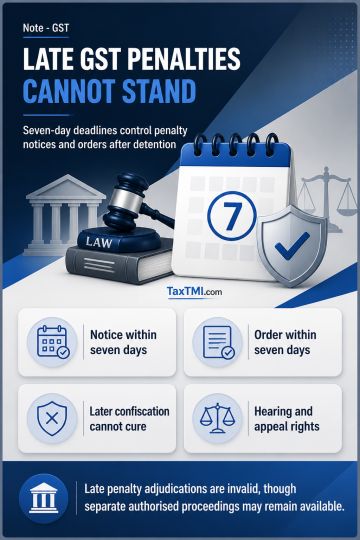
Section 129(3) of the CGST Act imposes a mandatory two-stage deadline: a penalty notice must issue within seven days of detention or seizure, followed by a penalty order within seven days of service. Breach of either period, including a one-day delay, invalidates the detention adjudication; later confiscation action cannot retrospectively cure it, although independently authorised proceedings may remain available. Service, including portal availability under Section 169, determines the second period, while Rule 142 requires corresponding electronic summaries. A hearing is required before penalty determination. Payment to obtain release, particularly under protest after objections, does not itself waive a challenge; a reasoned order remains necessary to preserve appellate access.
Section 129(3) of the CGST Act imposes a mandatory two-stage deadline: a penalty notice must issue within seven days of detention or seizure, followed by a penalty order within seven days of service. Breach of either period, including a one-day delay, invalidates the detention adjudication; later confiscation action cannot retrospectively cure it, although independently authorised proceedings may remain available. Service, including portal availability under Section 169, determines the second period, while Rule 142 requires corresponding electronic summaries. A hearing is required before penalty determination. Payment to obtain release, particularly under protest after objections, does not itself waive a challenge; a reasoned order remains necessary to preserve appellate access.
Note: It is a system-generated summary and is for quick reference only.
 TaxTMI
  TaxTMI