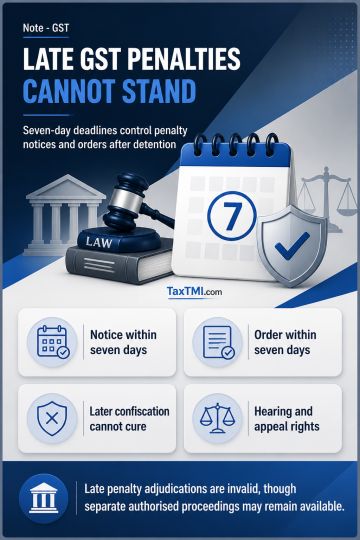
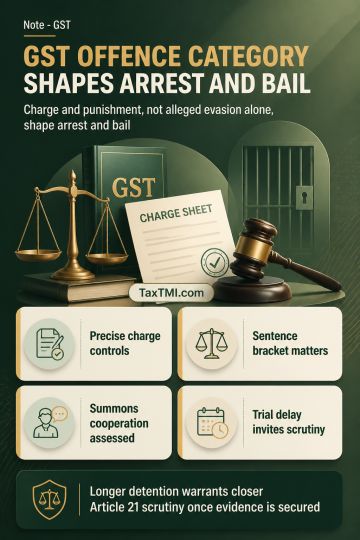
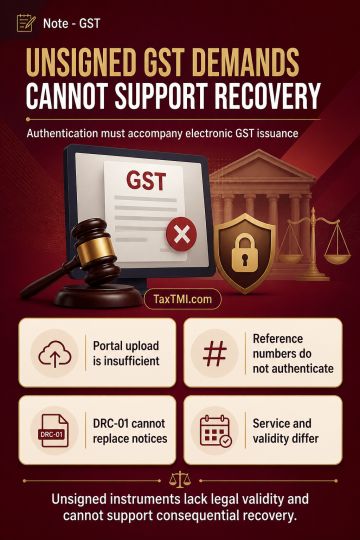
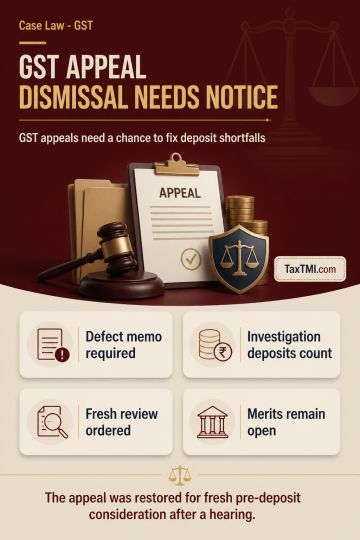
GST offence classification determines whether arrest and bail restrictions apply, while continued custody requires an individualised necessity assessm...
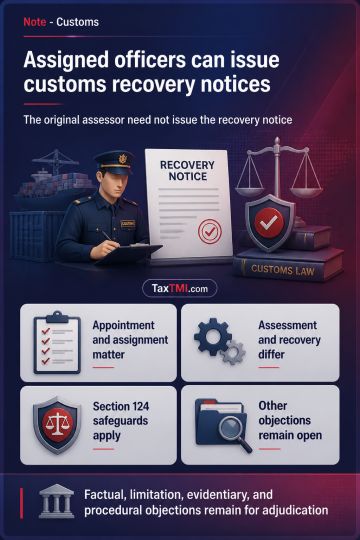
Proper-officer jurisdiction under customs law depends on an officer's appointment and function-specific assignment, rather than merely designation, investigation role, or original assessment. Assessment under Section 17 and recovery notice powers under Section 28 are distinct; the notice need not be issued by the officer who assessed the goods. Section 28(11) retrospectively validates qualifying customs officers' assessment powers and proper-officer status, unaffected by Explanation 2's preservation of the earlier recovery regime. Confiscation or penalty proceedings require separate compliance with Section 124, including written grounds, prescribed prior approval, representation, and hearing. Once jurisdiction is established, factual, limitation, evidentiary, and procedural objections remain for adjudication.
Proper-officer jurisdiction under customs law depends on an officer's appointment and function-specific assignment, rather than merely designation, investigation role, or original assessment. Assessment under Section 17 and recovery notice powers under Section 28 are distinct; the notice need not be issued by the officer who assessed the goods. Section 28(11) retrospectively validates qualifying customs officers' assessment powers and proper-officer status, unaffected by Explanation 2's preservation of the earlier recovery regime. Confiscation or penalty proceedings require separate compliance with Section 124, including written grounds, prescribed prior approval, representation, and hearing. Once jurisdiction is established, factual, limitation, evidentiary, and procedural objections remain for adjudication.
Note: It is a system-generated summary and is for quick reference only.
 TaxTMI
  TaxTMI