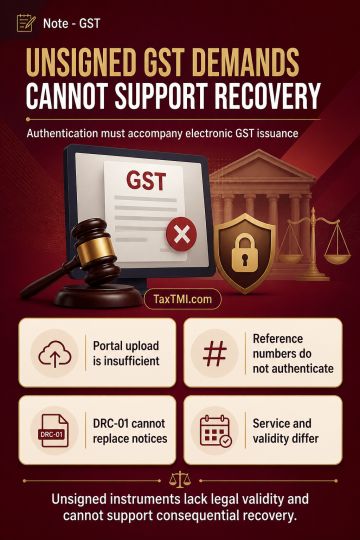
GST offence classification determines whether arrest and bail restrictions apply, while continued custody requires an individualised necessity assessm...
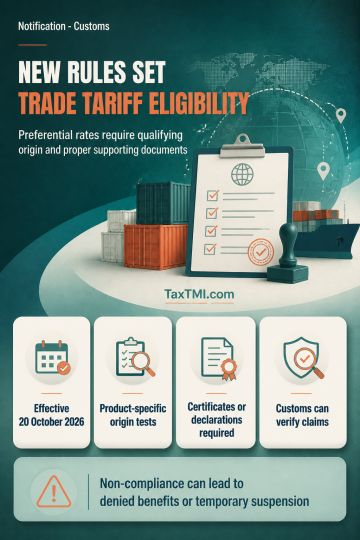
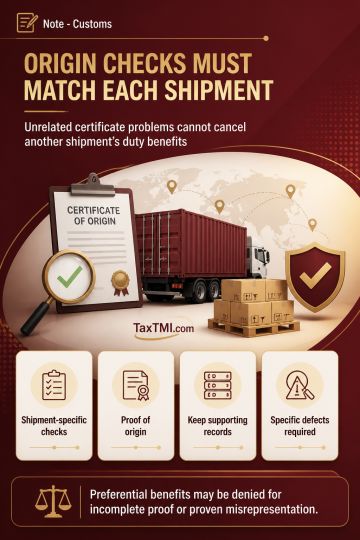
Preferential customs duty under the ASEAN-India arrangement requires proof that goods satisfy the applicable origin rules; a country-of-origin certificate does not remove the importer's duty of reasonable care. Origin verification must be certificate- and consignment-specific: an adverse foreign communication concerning identified unauthentic certificates cannot, without evidence linking other certificates to the defect or showing their cancellation or revocation, justify denial of benefits for those certificates. Importers must retain origin-related information and supporting records, while customs must undertake focused verification and identify the precise alleged defect. Preferential treatment may be denied for incomplete or non-conforming proof, or where origin requirements or misrepresentation are independently established.
Preferential customs duty under the ASEAN-India arrangement requires proof that goods satisfy the applicable origin rules; a country-of-origin certificate does not remove the importer's duty of reasonable care. Origin verification must be certificate- and consignment-specific: an adverse foreign communication concerning identified unauthentic certificates cannot, without evidence linking other certificates to the defect or showing their cancellation or revocation, justify denial of benefits for those certificates. Importers must retain origin-related information and supporting records, while customs must undertake focused verification and identify the precise alleged defect. Preferential treatment may be denied for incomplete or non-conforming proof, or where origin requirements or misrepresentation are independently established.
Note: It is a system-generated summary and is for quick reference only.
 TaxTMI
  TaxTMI