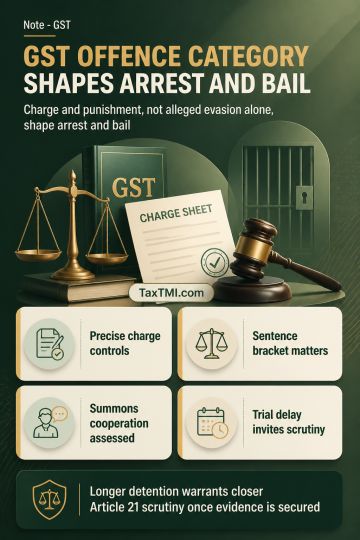
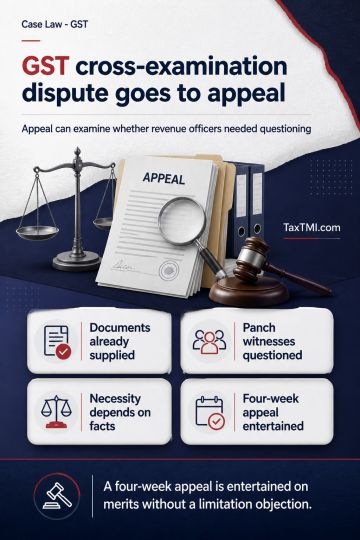
GST offence classification determines whether arrest and bail restrictions apply, while continued custody requires an individualised necessity assessm...
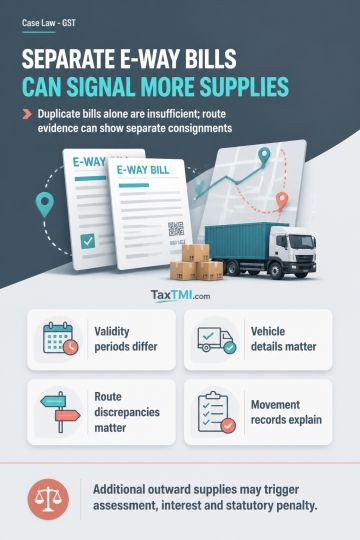
Separate e-way bills generated for the same tax invoices do not alone prove a second taxable supply. However, independent validity periods, vehicle details, movement declarations, changed GR particulars and route discrepancies may support an inference of separate consignments where no contemporaneous records establish uninterrupted movement, trans-shipment or delivery. Tax authorities retain the burden of proving short-payment, but taxpayers and transporters must explain material facts particularly within their knowledge. Tax unpaid on additional outward supplies may be assessed under the non-fraud short-payment regime; delayed output-tax payment attracts interest, and statutory penalty may follow despite absence of fraudulent intent.
Separate e-way bills generated for the same tax invoices do not alone prove a second taxable supply. However, independent validity periods, vehicle details, movement declarations, changed GR particulars and route discrepancies may support an inference of separate consignments where no contemporaneous records establish uninterrupted movement, trans-shipment or delivery. Tax authorities retain the burden of proving short-payment, but taxpayers and transporters must explain material facts particularly within their knowledge. Tax unpaid on additional outward supplies may be assessed under the non-fraud short-payment regime; delayed output-tax payment attracts interest, and statutory penalty may follow despite absence of fraudulent intent.
Note: It is a system-generated summary and is for quick reference only.
 TaxTMI
  TaxTMI