Customs-controlled cargo movement now includes GDL, subject to EXIM prioritisation, segregation, verification, reconciliation and enforcement safeguar...
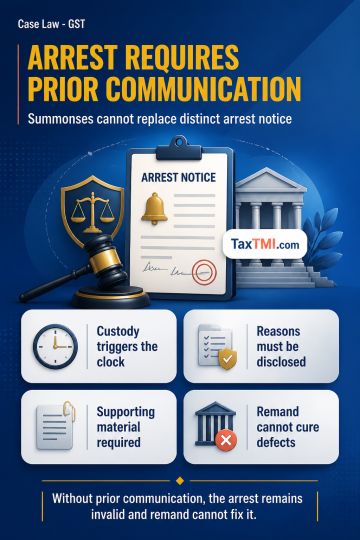
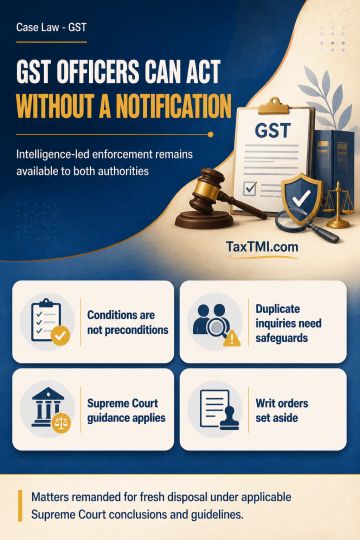
GST cross-empowerment remains effective without conditional notification, while duplicate proceedings require established safeguards against overlappi...
Consultancy and guidance supplied directly to a foreign client for its Indian business dealings do not constitute intermediary services where the consultant acts on its own account. Intermediary status requires three parties: a supplier of the principal service, its recipient, and a party performing the subsidiary role of arranging or facilitating that supply. Absence of a contractual relationship with Indian Railways and of any go-between function preserved the consultancy as a two-party service. The service therefore fell outside intermediary services, and the dropping of service tax, interest and penalty proceedings was upheld.
Consultancy and guidance supplied directly to a foreign client for its Indian business dealings do not constitute intermediary services where the consultant acts on its own account. Intermediary status requires three parties: a supplier of the principal service, its recipient, and a party performing the subsidiary role of arranging or facilitating that supply. Absence of a contractual relationship with Indian Railways and of any go-between function preserved the consultancy as a two-party service. The service therefore fell outside intermediary services, and the dropping of service tax, interest and penalty proceedings was upheld.
Note: It is a system-generated summary and is for quick reference only.
 TaxTMI
  TaxTMI