 TaxTMI





 07 Nov 2026

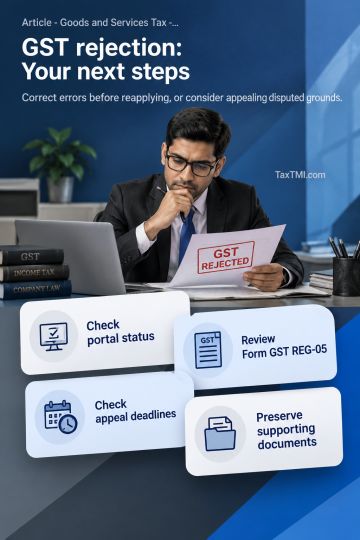
GST Registration Rejected - Reasons, Remedies & Next Steps
Applying for GST registration is an important step when starting or expanding a business. But what happens when your GST registration application gets rejected?
Imagine submitting all your business details and documents, waiting for approval, and then receiving a rejection notification from the GST portal. You may not understand what went wrong, whether you can apply again, or how the rejection will affect your business.
If your GST registration is rejected, the first step is to check the rejection order and understand the reason. Depending on the issue, you may be able to correct the information, submit a fresh application, or challenge the rejection through the appropriate appeal process.
Here are the common reasons for GST registration rejection and the steps you can take to resolve the issue.
1. Why Was Your GST Registration Application Rejected?
GST registration applications can be rejected for several reasons, particularly when the information or supporting documents are incomplete or inconsistent.
Some common reasons include:
- Incorrect business details: Differences in the business name, PAN details, or address can create problems during verification.
- Incomplete address proof: Missing or unclear ownership documents, rent agreements, or other address-related records may lead to objections.
- Missing landlord consent: If you operate from a rented property, the required supporting documents or owner's consent may be missing.
- Unclear documents: Blurred, incomplete, or unreadable uploads can make verification difficult.
- Unsatisfactory clarification: Your application may be rejected if the explanation or documents submitted in response to a GST clarification notice do not satisfy the officer.
- Missed response deadline: Not responding to a clarification notice within the prescribed time can also result in rejection.
Understanding the exact reason is important because submitting the same application again without correcting the issue may lead to another rejection.
2. What to Do After Receiving a GST Registration Rejection Notice?
If your GST application is rejected, do not immediately submit another application without reviewing the rejection order.
Follow these steps:
Step 1: Check your application status
Log in to the official GST portal and check your registration application status using your Application Reference Number (ARN).
Step 2: Read the rejection order carefully
Look for Form GST REG-05, which communicates the rejection of a registration application. It contains the reasons for rejection.
Step 3: Identify the actual problem
Check whether the issue relates to incorrect information, missing documents, business address verification, or an unsatisfactory response to a clarification notice.
Step 4: Collect the correct documents
Arrange the necessary supporting documents and verify that the information matches your application.
Step 5: Decide the next course of action
Depending on the circumstances, you may consider submitting a fresh application or challenging the rejection through the appropriate legal remedy.
3. Can You Apply for GST Registration Again After Rejection?
Yes, a rejected GST registration application does not automatically prevent you from applying again.
However, before submitting a fresh application, identify and correct the reason behind the earlier rejection.
For example:
- If your business address proof was incomplete, arrange the correct supporting documents.
- If your business name or PAN details were incorrect, verify and correct the information.
- If your landlord's consent was missing, arrange the required consent documents.
- If your clarification was inadequate, understand what information was missing before applying again.
Make sure the new application contains accurate information and all the required documents. Repeating the same mistakes may result in another rejection.
4. What If You Disagree With the GST Registration Rejection?
What if you submitted all the required documents, provided the requested clarification, and still received a rejection order?
In such situations, you may have the option to challenge the rejection before the appropriate Appellate Authority.
Before proceeding, consider the following:
- Read the rejection order and understand the grounds mentioned.
- Keep copies of your original application and supporting documents.
- Preserve the clarification notice and your submitted response.
- Prepare an explanation of why you believe the rejection was incorrect.
- Check the applicable appeal deadline and filing requirements.
An appeal against an order generally has a prescribed limitation period, so avoid delaying the decision. The appropriate remedy depends on the facts and the rejection order.
5. What Documents Should You Keep Ready for GST Registration?
Whether you are applying again or challenging a rejection, keeping your documents organised can help avoid unnecessary delays.
Commonly required documents may include:
- PAN card of the business or proprietor.
- Aadhaar details of the applicant or authorised signatory, as applicable.
- Photograph of the proprietor or authorised signatory.
- Proof of the principal place of business.
- Electricity bill or other accepted address proof.
- Rent agreement or ownership documents, as applicable.
- Consent or supporting documents for the business premises, where required.
- Bank account details and other information requested during registration.
The exact documents depend on your business structure, premises, and circumstances. Check the current GST portal requirements before submitting your application.
6. How Can You Avoid GST Registration Rejection in the Future?
A second rejection can waste time and delay your business operations. Therefore, review your application carefully before submitting it.
Here are a few practical precautions:
- Verify your PAN and business details.
- Ensure the business address matches your supporting documents.
- Upload clear and readable documents.
- Provide the required consent or ownership proof for your premises.
- Check your GST portal and registered email regularly for clarification notices.
- Respond to queries within the prescribed deadline.
- Review every detail before submitting the application.
If you are unsure about the documentation or the rejection reason, getting professional assistance before reapplying can help you avoid repeating the same mistakes.
7. When Should You Consult a GST Expert or Lawyer?
Not every GST registration rejection is simply a documentation issue. Sometimes, the rejection may involve disputed business details, verification concerns, or an order that you believe is incorrect.
Consider seeking professional assistance if:
- Your GST registration has been rejected more than once.
- You do not understand the reason mentioned in the rejection order.
- Your application was rejected despite submitting the requested documents.
- You are confused about whether to reapply or file an appeal.
- You need help preparing a response to a GST clarification notice.
If you are facing any of these problems, it may be helpful to Talk to a Lawyer and understand the available legal options. A lawyer can help you review the rejection order, understand the applicable procedure, and decide the appropriate next steps for your business.
Conclusion
Getting your GST registration rejected can delay business operations and create unnecessary confusion. However, it does not mean you have run out of options.
Start by reviewing the rejection order, identifying the actual problem, and arranging the correct documents. If the issue can be resolved through a fresh application, make the necessary corrections before submitting it again. If you believe the rejection is unjustified, explore the appropriate appeal process.
Taking the right steps at the right time can help you resolve GST registration issues and move forward with your business.