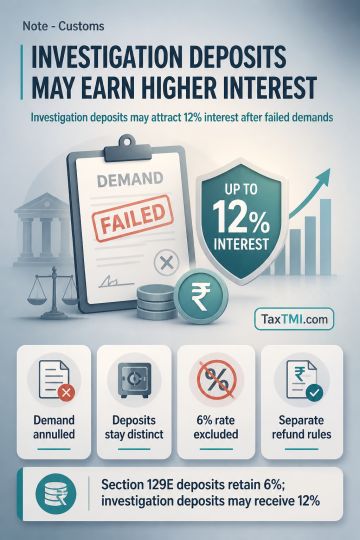
Investigation deposits refunded after failed customs demands fall outside the statutory appellate pre-deposit interest regime and may attract compensa...
Resolution plan finality extinguishes unquantified operational-creditor claims and pending proceedings unless the approved plan expressly preserves th...
Stakeholder-list modification permits liquidators to update entries on new information, subject to notifying the Adjudicating Authority within prescri...
GST proceedings initiated against an amalgamating company after the scheme of merger took effect were void ab initio because the entity had ceased to exist in law. The Court held that once the merger was intimated to the GST authorities, a show-cause notice and any consequential order could not validly be issued against the non-existent company, as this was a jurisdictional defect. Section 87 of the CGST Act was confined to the interregnum between the effective date of amalgamation and the date of the order, and did not authorise proceedings against a dissolved entity after merger. The impugned order was therefore unsustainable and the petition was allowed.
GST proceedings initiated against an amalgamating company after the scheme of merger took effect were void ab initio because the entity had ceased to exist in law. The Court held that once the merger was intimated to the GST authorities, a show-cause notice and any consequential order could not validly be issued against the non-existent company, as this was a jurisdictional defect. Section 87 of the CGST Act was confined to the interregnum between the effective date of amalgamation and the date of the order, and did not authorise proceedings against a dissolved entity after merger. The impugned order was therefore unsustainable and the petition was allowed.
Note: It is a system-generated summary and is for quick reference only.
 TaxTMI
  TaxTMI