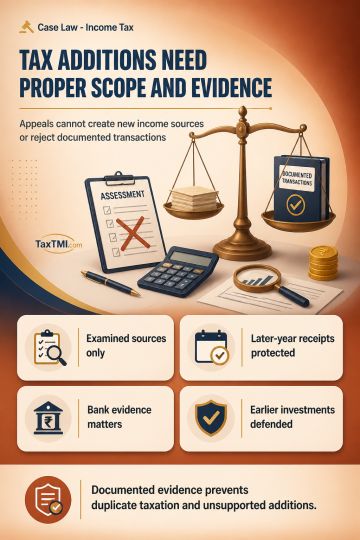
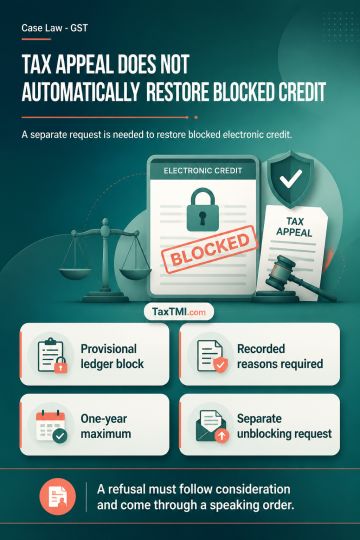
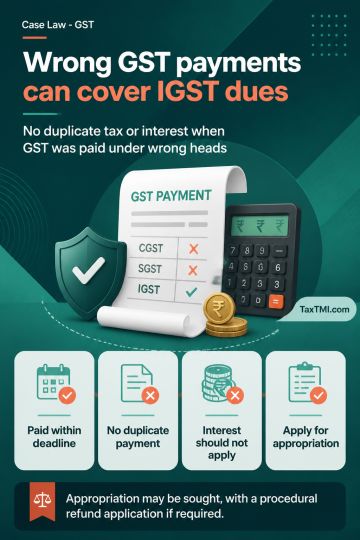
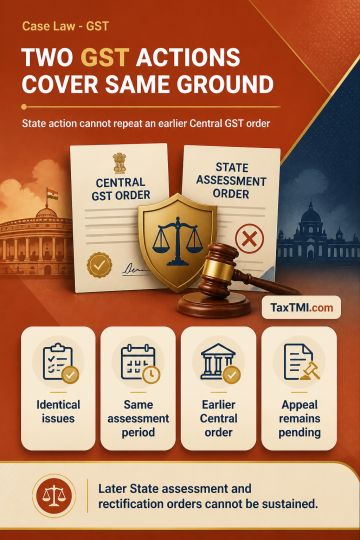
Appellate enhancement limits protect against new income sources, while documented credits and prior-year investments resist unexplained-income additio...
Capital-gains exemption for charitable trusts extends to qualifying fixed deposits, while unrecoverable TDS write-offs may constitute income applicati...
Page of 4868
Press 'Enter' after typing page number.
1 to 20 of 97344 Results
❮
❯
❯❯
0 / 200
Expand Note
Add to Folder
No Folders have been created
+
Are you sure you want to delete "My most important" ?
ITAT dismissed Revenue's appeal, finding no merit in challenging the CIT(A)'s findings. The tribunal confirmed that the assessee had already added back the disputed amount while computing total income, rendering subsequent disallowance improper. The contingent liability was appropriately disclosed in financial statements without impacting profit and loss account. The tax auditor's inadvertent error in reporting was noted, but did not alter the fundamental tax treatment. The tribunal emphasized that the assessee did not claim the contingent liability as an expense, and the departmental records substantiated this position. Consequently, the grounds raised by Revenue were comprehensively rejected.
ITAT dismissed Revenue's appeal, finding no merit in challenging the CIT(A)'s findings. The tribunal confirmed that the assessee had already added back the disputed amount while computing total income, rendering subsequent disallowance improper. The contingent liability was appropriately disclosed in financial statements without impacting profit and loss account. The tax auditor's inadvertent error in reporting was noted, but did not alter the fundamental tax treatment. The tribunal emphasized that the assessee did not claim the contingent liability as an expense, and the departmental records substantiated this position. Consequently, the grounds raised by Revenue were comprehensively rejected.
Note: It is a system-generated summary and is for quick reference only.
 TaxTMI
  TaxTMI