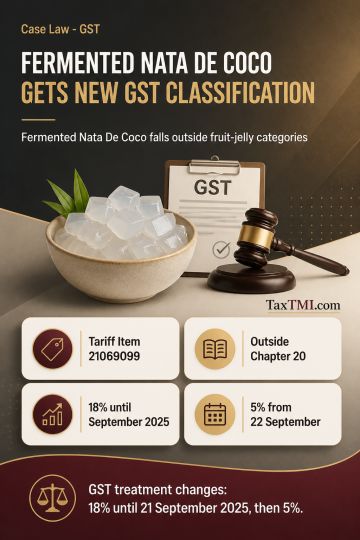
Residual food-preparation classification places fermented Nata De Coco outside fruit-jelly categories, changing its GST treatment across notified peri...
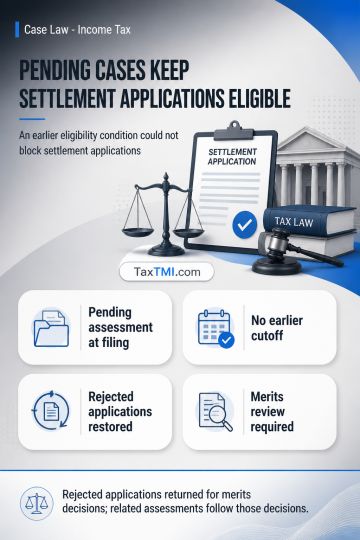
Settlement application eligibility requires a pending assessment when filed, preventing an extra prior-eligibility condition from blocking considerati...
The case pertains to the challenge to assessment orders passed by the Assessing Officer for the assessment years 2007-2008 to 2009-2010 on the grounds of time limitation under the Pondicherry Value Added Tax Act, 2007. The key issues were: whether the powder coating work undertaken by the assessee amounted to execution of works contract, and whether it involved transfer of property. The court held that the powder coating work fell within the definition of 'works contract' u/s 2(zp) of the Act, involving transfer of property, making the assessee liable to pay tax u/s 15(1). Regarding the time limitation, the court ruled that the assessment orders were passed within the prescribed three-year period from the end of the relevant assessment year, as the initial notices were issued within that timeframe u/s 24(5), even though the final orders were passed later. Consequently, the substantial questions of law were answered in favor of the revenue department.
The case pertains to the challenge to assessment orders passed by the Assessing Officer for the assessment years 2007-2008 to 2009-2010 on the grounds of time limitation under the Pondicherry Value Added Tax Act, 2007. The key issues were: whether the powder coating work undertaken by the assessee amounted to execution of works contract, and whether it involved transfer of property. The court held that the powder coating work fell within the definition of 'works contract' u/s 2(zp) of the Act, involving transfer of property, making the assessee liable to pay tax u/s 15(1). Regarding the time limitation, the court ruled that the assessment orders were passed within the prescribed three-year period from the end of the relevant assessment year, as the initial notices were issued within that timeframe u/s 24(5), even though the final orders were passed later. Consequently, the substantial questions of law were answered in favor of the revenue department.
Note: It is a system-generated summary and is for quick reference only.
 TaxTMI
  TaxTMI