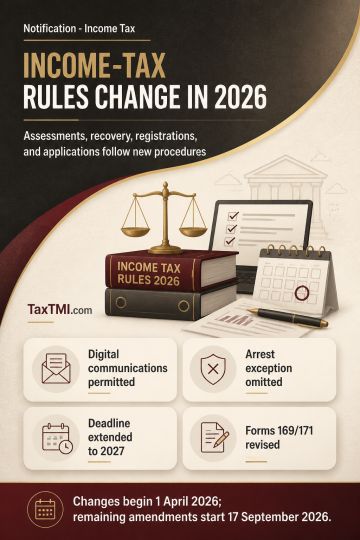
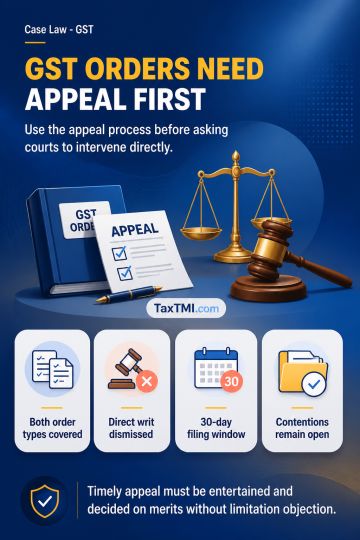
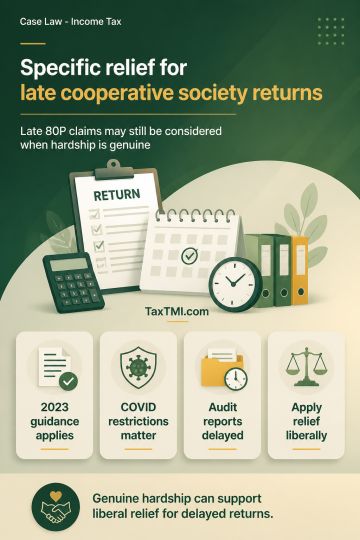
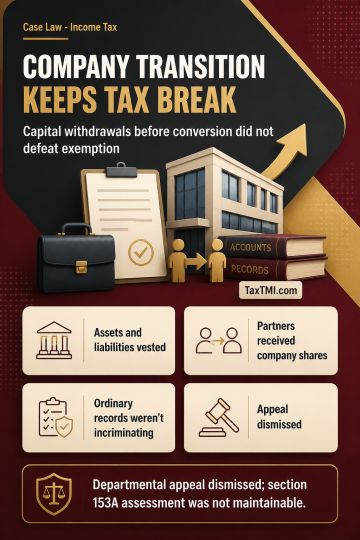
Faceless assessment and registration procedures are updated through electronic communication, revised recovery rules, extended deadlines, and replacem...
Risk-based selective vessel boarding requires accurate declarations and preserves master and agent liability where physical inspections are not select...
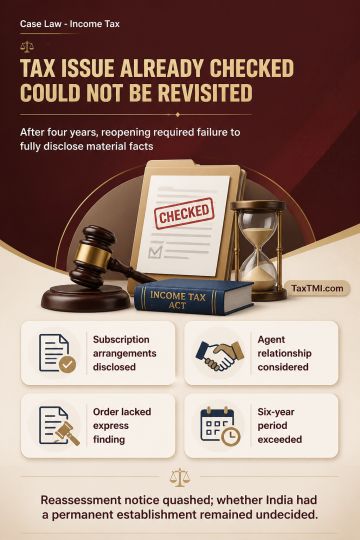
Permanent-establishment reassessment cannot revisit scrutinised disclosures; extended reopening fails without undisclosed material facts and within st...
The Appellate Tribunal considered a case involving revision u/s...
Revision u/s 263: Tribunal rules in favor of depreciation claim on goodwill and Trade name. Assessment order was neither erroneous nor prejudicial to revenue.
Contents
Summary
Note
Bookmark
Share
✓ Copied successfully !
Print
Print Options
For full text, please login
Login to TaxTMI
Verification Pending
The Email Id has not been verified. Click on the link we have sent on
The Appellate Tribunal considered a case involving revision u/s 263 of the Income Tax Act regarding depreciation claim on goodwill and intangible assets. The Principal Commissioner believed the depreciation claimed was disallowed. The Tribunal found that the goodwill arose post-amalgamation and its valuation was supported by a report approved by the National Company Law Tribunal. A Supreme Court precedent supported the depreciation claim. The Tribunal also addressed a disallowance issue, determining that the error didn't lead to revenue loss. Citing the Paville Projects case, the Tribunal concluded that the assessment order was neither erroneous nor prejudicial to revenue, ruling in favor of the assessee.
The Appellate Tribunal considered a case involving revision u/s 263 of the Income Tax Act regarding depreciation claim on goodwill and intangible assets. The Principal Commissioner believed the depreciation claimed was disallowed. The Tribunal found that the goodwill arose post-amalgamation and its valuation was supported by a report approved by the National Company Law Tribunal. A Supreme Court precedent supported the depreciation claim. The Tribunal also addressed a disallowance issue, determining that the error didn't lead to revenue loss. Citing the Paville Projects case, the Tribunal concluded that the assessment order was neither erroneous nor prejudicial to revenue, ruling in favor of the assessee.
Note: It is a system-generated summary and is for quick reference only.
 TaxTMI
  TaxTMI