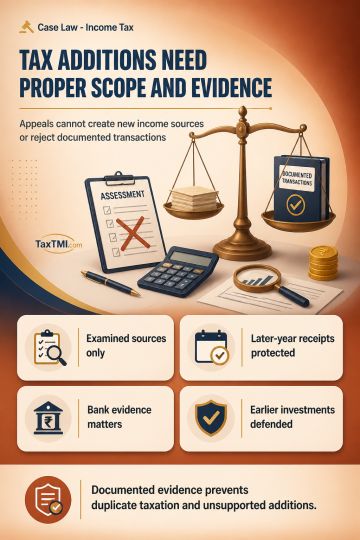
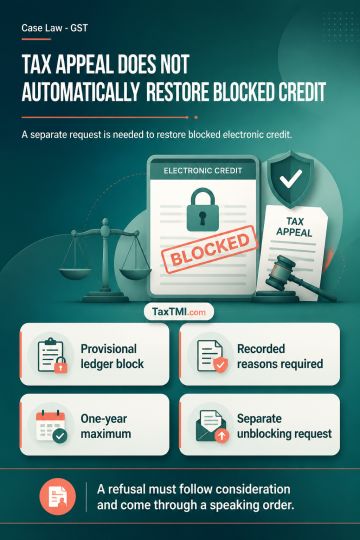
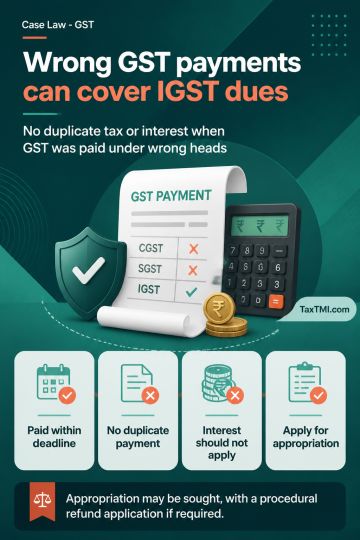
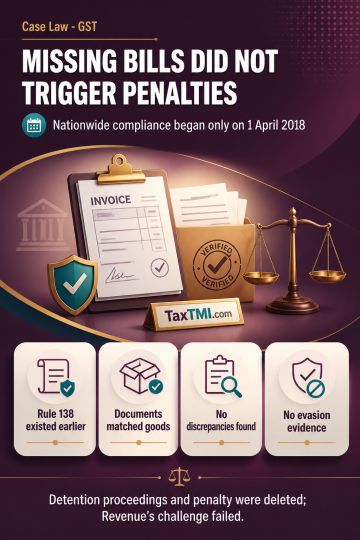
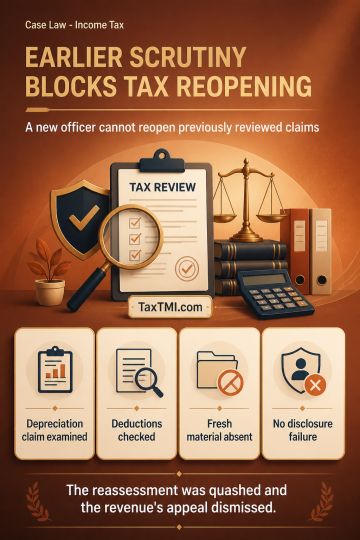
Appellate enhancement limits protect against new income sources, while documented credits and prior-year investments resist unexplained-income additio...
Capital-gains exemption for charitable trusts extends to qualifying fixed deposits, while unrecoverable TDS write-offs may constitute income applicati...
Page of 4868
Press 'Enter' after typing page number.
1 to 20 of 97344 Results
❮
❯
❯❯
0 / 200
Expand Note
Add to Folder
No Folders have been created
+
Are you sure you want to delete "My most important" ?
The High Court addressed the issue of disallowance u/s. 80IA(4) to determine if the assessee was a contractor or a developer of infrastructure facilities. The Court referred to a previous case where it was established that the assessee was a developer eligible for deduction u/s. 80IA(4). The Court considered various aspects of the agreement, such as payment terms, responsibilities, and insurance, concluding that the assessee was a developer, not a contractor. The ITAT's decision to delete the disallowance was upheld, ruling in favor of the assessee.
The High Court addressed the issue of disallowance u/s. 80IA(4) to determine if the assessee was a contractor or a developer of infrastructure facilities. The Court referred to a previous case where it was established that the assessee was a developer eligible for deduction u/s. 80IA(4). The Court considered various aspects of the agreement, such as payment terms, responsibilities, and insurance, concluding that the assessee was a developer, not a contractor. The ITAT's decision to delete the disallowance was upheld, ruling in favor of the assessee.
Note: It is a system-generated summary and is for quick reference only.
 TaxTMI
  TaxTMI