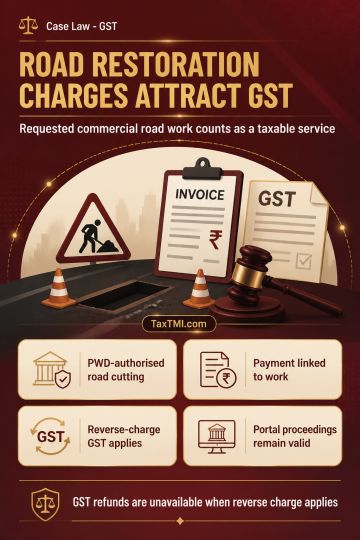
Road restoration charges constitute taxable services when requested for commercial pipeline activity, requiring reverse-charge GST from the business r...
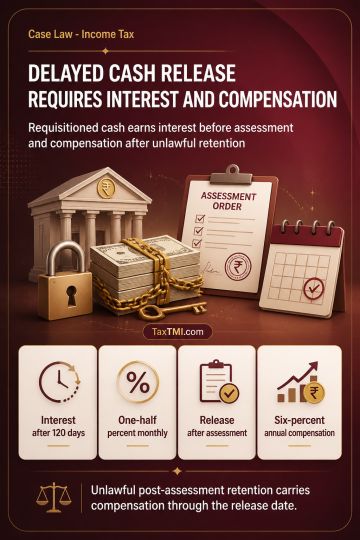
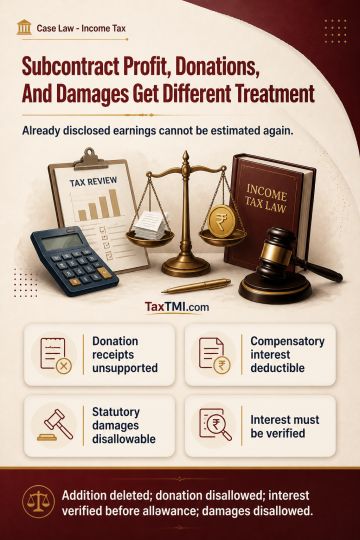
Interest on delayed release of requisitioned cash includes statutory pre-assessment interest and restitutionary compensation for unlawful post-assessm...
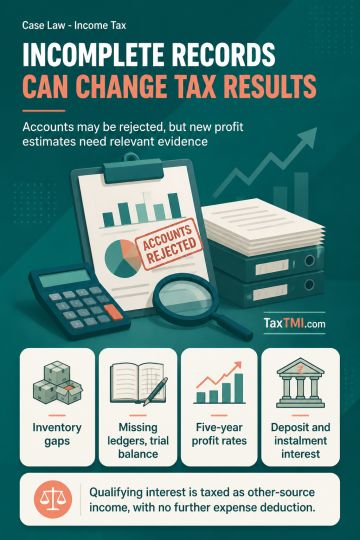
Incomplete inventory records justify rejecting accounts, while profit estimation requires relevant comparable material and interest falls under other ...
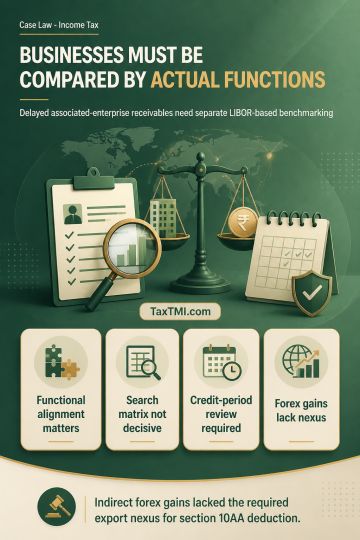
Transfer-pricing comparability requires functional alignment; delayed associated-enterprise receivables need separate LIBOR-based benchmarking, while ...
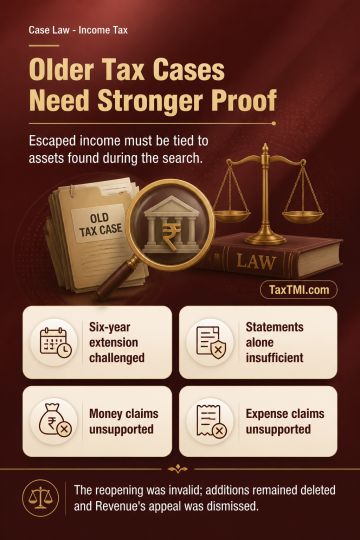
Extended reassessment limitation in search cases requires asset-linked escaped income, invalidating additions based only on unexplained money or expen...
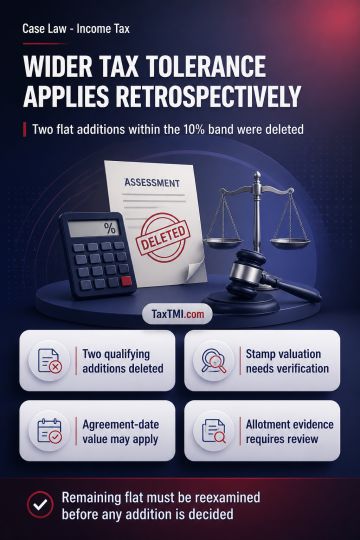
Enhanced tolerance band under section 43CA applies retrospectively, deleting qualifying deemed-sale additions while disputed stamp valuation requires ...
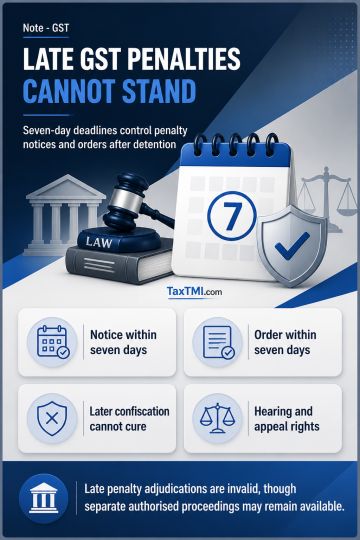
Section 129(3) of the CGST Act imposes a mandatory two-stage deadline: a penalty notice must issue within seven days of detention or seizure, followed by a penalty order within seven days of service. Breach of either period, including a one-day delay, invalidates the detention adjudication; later confiscation action cannot retrospectively cure it, although independently authorised proceedings may remain available. Service, including portal availability under Section 169, determines the second period, while Rule 142 requires corresponding electronic summaries. A hearing is required before penalty determination. Payment to obtain release, particularly under protest after objections, does not itself waive a challenge; a reasoned order remains necessary to preserve appellate access.
Section 129(3) of the CGST Act imposes a mandatory two-stage deadline: a penalty notice must issue within seven days of detention or seizure, followed by a penalty order within seven days of service. Breach of either period, including a one-day delay, invalidates the detention adjudication; later confiscation action cannot retrospectively cure it, although independently authorised proceedings may remain available. Service, including portal availability under Section 169, determines the second period, while Rule 142 requires corresponding electronic summaries. A hearing is required before penalty determination. Payment to obtain release, particularly under protest after objections, does not itself waive a challenge; a reasoned order remains necessary to preserve appellate access.
Note: It is a system-generated summary and is for quick reference only.
 TaxTMI
  TaxTMI
 of 4910