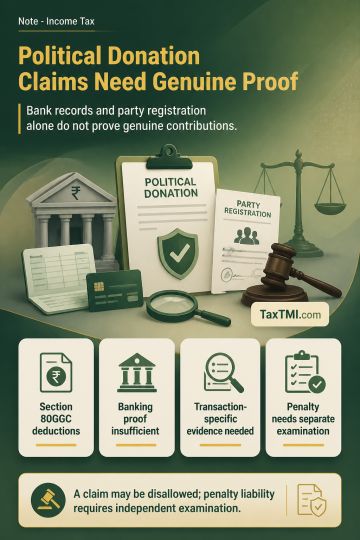
Political contribution deductions require genuine transactions; banking records and party registration alone cannot defeat evidence of accommodation e...
Post-death GST liability permits fresh proceedings against legal representatives, while discontinued-business recovery remains limited to the inherite...
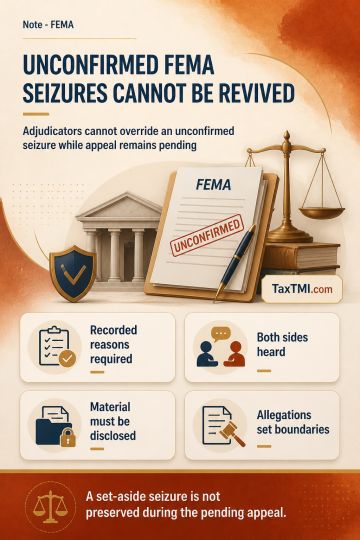
Non-confirmation of FEMA seizure prevents adjudicators from overriding pending appellate findings on recorded reasons and suspected foreign asset hold...
The article addresses challenge to tax additions treating...
Genuineness of investment evidence determines LTCG entitlement; non specific regulatory reports cannot displace transaction specific documentary proof.
Contents
Summary
Note
Bookmark
Share
✓ Copied successfully !
Print
Print Options
For full text, please login
Login to TaxTMI
Verification Pending
The Email Id has not been verified. Click on the link we have sent on
The article addresses challenge to tax additions treating claimed long term capital gains as non genuine and invoking unexplained cash credit and alleged commission additions; it explains that where the assessee produced DEMAT records, bank statements, cheques, share certificates and broker notes and had paid MAT, the authorities erred in rejecting LTCG claim on a generalized SEBI modus operandi suspicion because cited SEBI orders did not pertain to the assessee's transactions; the piece concludes that evidentiary burden requires transaction specific adverse findings and that similar findings apply to the subsequent assessment year, leading to allowance of the appeals.
The article addresses challenge to tax additions treating claimed long term capital gains as non genuine and invoking unexplained cash credit and alleged commission additions; it explains that where the assessee produced DEMAT records, bank statements, cheques, share certificates and broker notes and had paid MAT, the authorities erred in rejecting LTCG claim on a generalized SEBI modus operandi suspicion because cited SEBI orders did not pertain to the assessee's transactions; the piece concludes that evidentiary burden requires transaction specific adverse findings and that similar findings apply to the subsequent assessment year, leading to allowance of the appeals.
Note: It is a system-generated summary and is for quick reference only.
 TaxTMI
  TaxTMI