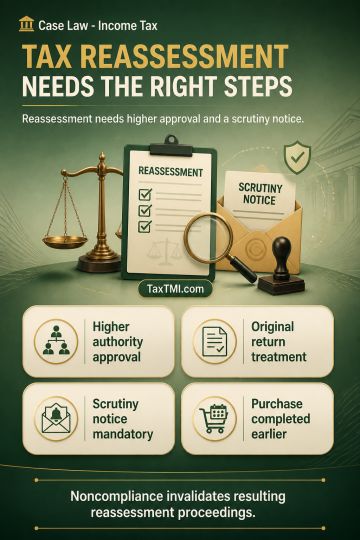
Opportunity to furnish unsecured-loan confirmations is required before reassessment initiation; proceedings require fresh consideration after taxpayer...
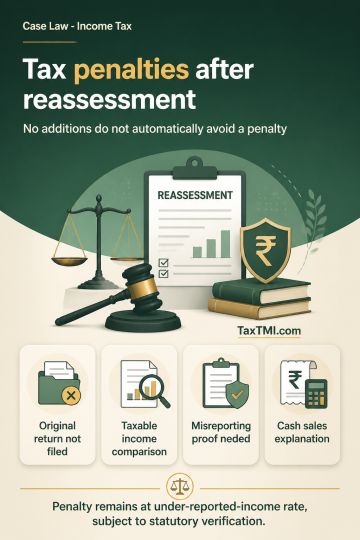
Under-reporting on a first reassessment return attracts penalty, while enhanced misreporting penalty requires proof of a statutory misreporting catego...
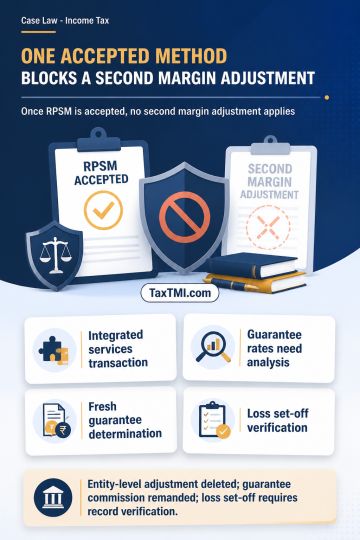
Form 26AS evidence requires successor-entity accounting verification after business transfer, while invoice-supported related-party advertising expend...
Capital gains computation under section 50C: the property is recorded as agricultural/residential in revenue records, so circle rate characterisation must follow those records and the multiplicative factor of 1 applies even though the building was used commercially without sanction; deemed conversion cannot be presumed from unauthorized use until recognised by revenue authorities, so the assessing officer's application of factor 3 was contrary to revenue records and invalid, and the appellate authority's direction to apply factor 1 was affirmed by ITAT, resulting in the decision against the revenue.
Capital gains computation under section 50C: the property is recorded as agricultural/residential in revenue records, so circle rate characterisation must follow those records and the multiplicative factor of 1 applies even though the building was used commercially without sanction; deemed conversion cannot be presumed from unauthorized use until recognised by revenue authorities, so the assessing officer's application of factor 3 was contrary to revenue records and invalid, and the appellate authority's direction to apply factor 1 was affirmed by ITAT, resulting in the decision against the revenue.
Note: It is a system-generated summary and is for quick reference only.
 TaxTMI
  TaxTMI
 of 4920