Political contribution deductions require genuine transactions; banking records and party registration alone cannot defeat evidence of accommodation e...
Post-death GST liability permits fresh proceedings against legal representatives, while discontinued-business recovery remains limited to the inherite...
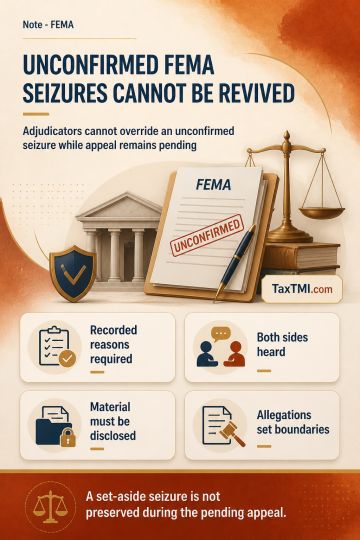
Non-confirmation of FEMA seizure prevents adjudicators from overriding pending appellate findings on recorded reasons and suspected foreign asset hold...
Sanction for prosecution of a public servant must be granted by the authority competent to remove the officer; a sanction accorded by a subordinate authority is a jurisdictional defect, rendering the sanction void ab initio and necessitating discharge, which was accordingly upheld and proceedings terminated. The statutory requirement in Section 19(1)(c) of the PC Act is anchored in the constitutional safeguard of Article 311(1), and departmental circulars cannot cure the defect; the curative principle is inapplicable where a superior legal impediment exists (withdrawal of general consent), so no fresh sanction could sustain the prosecution.
Sanction for prosecution of a public servant must be granted by the authority competent to remove the officer; a sanction accorded by a subordinate authority is a jurisdictional defect, rendering the sanction void ab initio and necessitating discharge, which was accordingly upheld and proceedings terminated. The statutory requirement in Section 19(1)(c) of the PC Act is anchored in the constitutional safeguard of Article 311(1), and departmental circulars cannot cure the defect; the curative principle is inapplicable where a superior legal impediment exists (withdrawal of general consent), so no fresh sanction could sustain the prosecution.
Note: It is a system-generated summary and is for quick reference only.
 TaxTMI
  TaxTMI