Mandatory textile export qualifiers distinguish flame-retardant fabrics from other listed fabrics for automated identification under the textiles ince...
Personal liberty safeguards restrict arrest after court-directed GST appearance, requiring interim release where authorities overreach pending proceed...
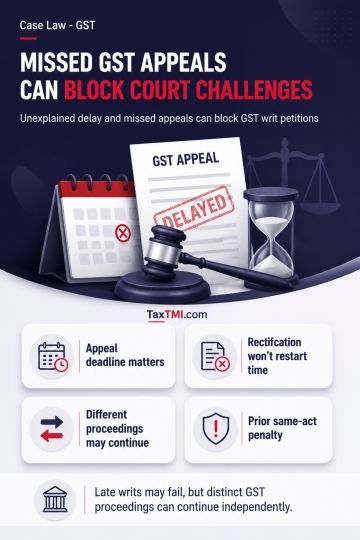
Alternative statutory remedy and delay bar GST writ challenges despite pending rectification, while distinct subject matter permits parallel proceedin...
HC ruled on multiple expenditure deduction claims by a coal mining entity. The court largely upheld the Tribunal's decision, allowing deductions for education, community development, sports and recreation, and social welfare expenses as legitimate business expenditures mandated by National Coal Wage Agreement. For environmental and transit camp expenses, the matter was remitted to the Assessing Officer for re-examination. Significantly, the court ruled against the assessee on overburden removal expenses, categorizing them as capital expenditure rather than revenue expenditure, irrespective of the mining stage. The court also confirmed additional depreciation entitlement for the Nigahi Project due to increased production. Overall, the decision balanced business operational expenses with strict interpretations of capital versus revenue expenditures.
HC ruled on multiple expenditure deduction claims by a coal mining entity. The court largely upheld the Tribunal's decision, allowing deductions for education, community development, sports and recreation, and social welfare expenses as legitimate business expenditures mandated by National Coal Wage Agreement. For environmental and transit camp expenses, the matter was remitted to the Assessing Officer for re-examination. Significantly, the court ruled against the assessee on overburden removal expenses, categorizing them as capital expenditure rather than revenue expenditure, irrespective of the mining stage. The court also confirmed additional depreciation entitlement for the Nigahi Project due to increased production. Overall, the decision balanced business operational expenses with strict interpretations of capital versus revenue expenditures.
Note: It is a system-generated summary and is for quick reference only.
 TaxTMI
  TaxTMI