Mandatory textile export qualifiers distinguish flame-retardant fabrics from other listed fabrics for automated identification under the textiles ince...
Personal liberty safeguards restrict arrest after court-directed GST appearance, requiring interim release where authorities overreach pending proceed...
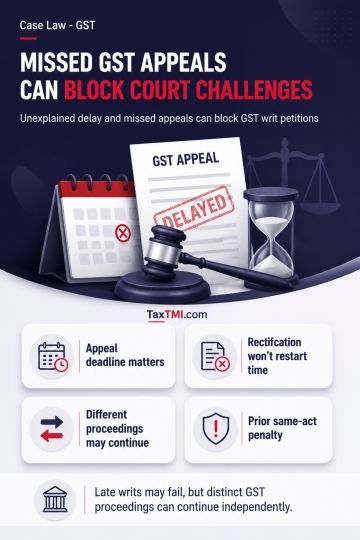
Alternative statutory remedy and delay bar GST writ challenges despite pending rectification, while distinct subject matter permits parallel proceedin...
The Income Tax Bill 2025 introduces substantial modifications to residential status provisions compared to the Income-tax Act 1961. Key changes include restructuring into 14 sub-sections, enhanced clarity in determining individual residency through refined 182-day and 60-day rules, and specific provisions for high-income individuals with Rs. 15 lakh threshold. The bill maintains dual criteria for company residency (Indian incorporation or POEM) while expanding POEM definition. NOR status criteria are broadened with additional categories for high-income individuals and deemed residents. The revised framework aligns with international standards, emphasizing substance over form and addressing global mobility concerns. These amendments aim to reduce interpretational disputes while providing clearer guidance for status determination across taxpayer categories.
The Income Tax Bill 2025 introduces substantial modifications to residential status provisions compared to the Income-tax Act 1961. Key changes include restructuring into 14 sub-sections, enhanced clarity in determining individual residency through refined 182-day and 60-day rules, and specific provisions for high-income individuals with Rs. 15 lakh threshold. The bill maintains dual criteria for company residency (Indian incorporation or POEM) while expanding POEM definition. NOR status criteria are broadened with additional categories for high-income individuals and deemed residents. The revised framework aligns with international standards, emphasizing substance over form and addressing global mobility concerns. These amendments aim to reduce interpretational disputes while providing clearer guidance for status determination across taxpayer categories.
Note: It is a system-generated summary and is for quick reference only.
 TaxTMI
  TaxTMI