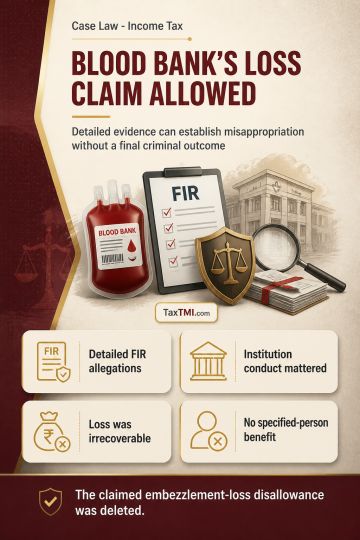
Embezzlement losses in charitable institutions remain allowable when misappropriation is established, irrecoverable, and not a specified-person benefi...
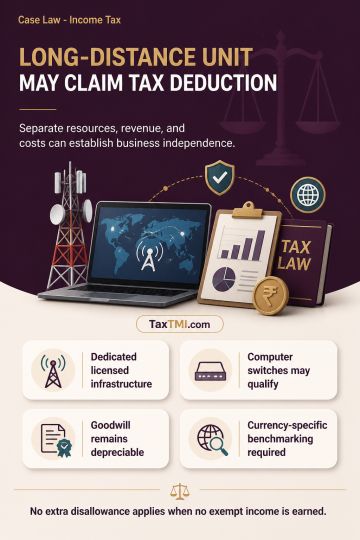
National long-distance undertaking status supports deduction where separately licensed infrastructure, resources, revenue, and expenditure establish c...
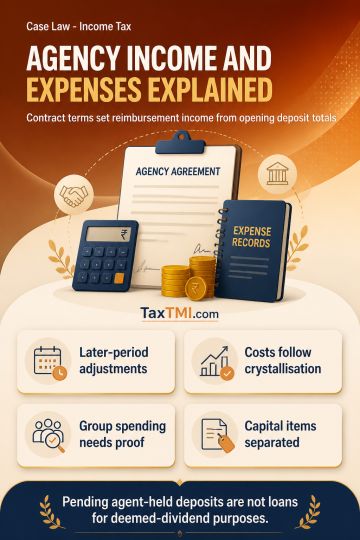
Agency reimbursement income follows contractual deposit-liability computation, while pending deposit collections do not constitute deemed-dividend loa...
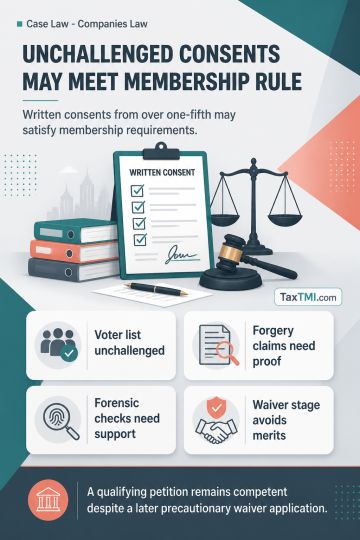
Membership-consent thresholds for oppression petitions are satisfied by unchallenged voter-list consents, while unsupported forgery claims require pro...
HC held that electronic service of notices under Central Excise Act 1944 is permissible through application of CGST Act provisions. Reading Sections 142(8)(a) and 169(1)(c) of CGST Act together enables electronic service modes for existing laws including 1944 Act, despite Section 37C being silent on email service. Court rejected petitioner's argument against electronic notice validity and distinguished prior CESTAT precedent as inapplicable. Directed petitioner to pursue statutory appeal remedy with delay condonation application, excluding court proceedings duration from limitation period. Time spent before court would not count towards appeal limitation. Petition disposed of with directions to appellate authority to consider appeal per law.
HC held that electronic service of notices under Central Excise Act 1944 is permissible through application of CGST Act provisions. Reading Sections 142(8)(a) and 169(1)(c) of CGST Act together enables electronic service modes for existing laws including 1944 Act, despite Section 37C being silent on email service. Court rejected petitioner's argument against electronic notice validity and distinguished prior CESTAT precedent as inapplicable. Directed petitioner to pursue statutory appeal remedy with delay condonation application, excluding court proceedings duration from limitation period. Time spent before court would not count towards appeal limitation. Petition disposed of with directions to appellate authority to consider appeal per law.
Note: It is a system-generated summary and is for quick reference only.
 TaxTMI
  TaxTMI
 of 4881