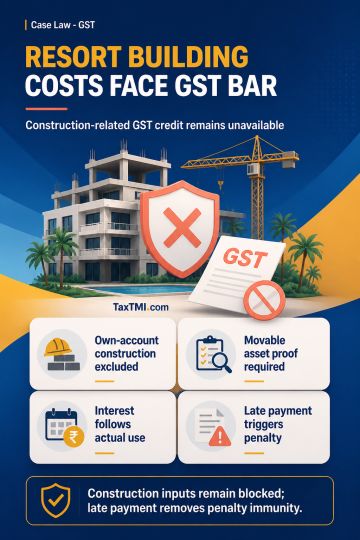
Blocked input tax credit for resort construction remains unavailable; interest follows actual utilisation, while delayed payment attracts statutory pe...
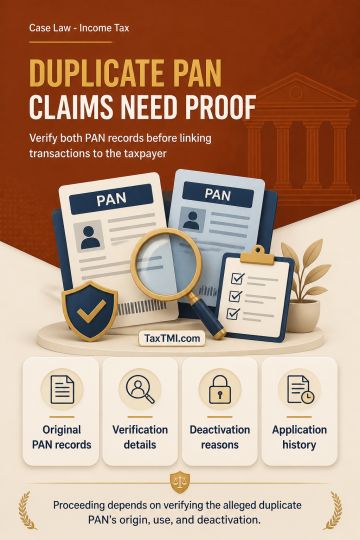
Duplicate PAN allocation requires record verification and deactivation reasons before assessment-related transactions can be attributed to an assessee...
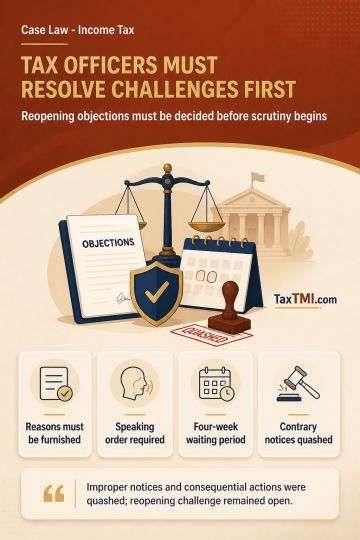
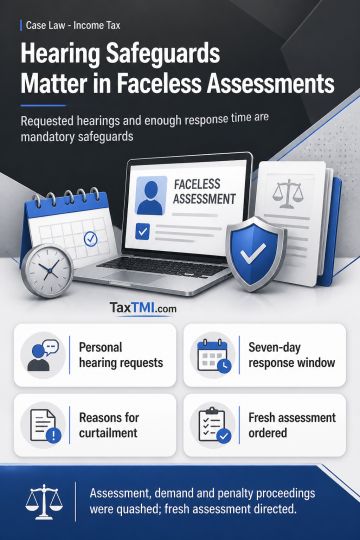
Faceless assessment safeguards require requested personal hearings and adequate final show-cause response time, failing which reassessment is required...
HC held that electronic service of notices under Central Excise Act 1944 is permissible through application of CGST Act provisions. Reading Sections 142(8)(a) and 169(1)(c) of CGST Act together enables electronic service modes for existing laws including 1944 Act, despite Section 37C being silent on email service. Court rejected petitioner's argument against electronic notice validity and distinguished prior CESTAT precedent as inapplicable. Directed petitioner to pursue statutory appeal remedy with delay condonation application, excluding court proceedings duration from limitation period. Time spent before court would not count towards appeal limitation. Petition disposed of with directions to appellate authority to consider appeal per law.
HC held that electronic service of notices under Central Excise Act 1944 is permissible through application of CGST Act provisions. Reading Sections 142(8)(a) and 169(1)(c) of CGST Act together enables electronic service modes for existing laws including 1944 Act, despite Section 37C being silent on email service. Court rejected petitioner's argument against electronic notice validity and distinguished prior CESTAT precedent as inapplicable. Directed petitioner to pursue statutory appeal remedy with delay condonation application, excluding court proceedings duration from limitation period. Time spent before court would not count towards appeal limitation. Petition disposed of with directions to appellate authority to consider appeal per law.
Note: It is a system-generated summary and is for quick reference only.
 TaxTMI
  TaxTMI