Mandatory textile export qualifiers distinguish flame-retardant fabrics from other listed fabrics for automated identification under the textiles ince...
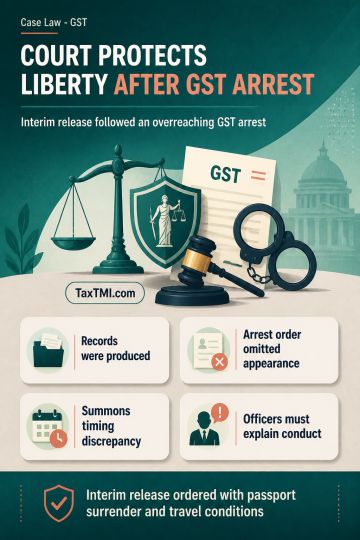
Personal liberty safeguards restrict arrest after court-directed GST appearance, requiring interim release where authorities overreach pending proceed...
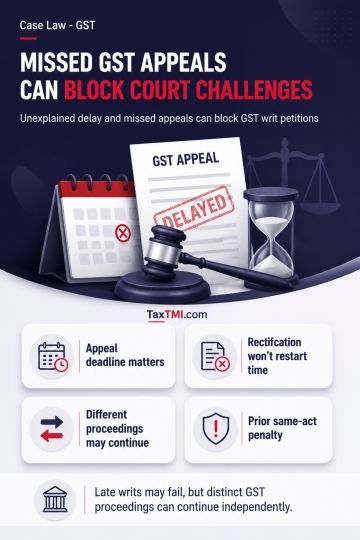
Alternative statutory remedy and delay bar GST writ challenges despite pending rectification, while distinct subject matter permits parallel proceedin...
This order u/s 119(1) of the Income-tax Act, 1961 specifies the...
Monetary limits on waiving interest for late tax payment: Up to 50L by Commissioner, 50L-1.5Cr by Chief Commissioner, above 1.5Cr by Pr. Chief Commissioner.
Contents
Summary
Note
Bookmark
Share
✓ Copied successfully !
Print
Print Options
For full text, please login
Login to TaxTMI
Verification Pending
The Email Id has not been verified. Click on the link we have sent on
This order u/s 119(1) of the Income-tax Act, 1961 specifies the monetary limits for income-tax authorities to exercise their powers of reduction or waiver of interest payable u/s 220(2) for non-payment of income tax demand. Principal Commissioner/Commissioner can reduce/waive interest up to Rs. 50 lacs, Chief Commissioner/Director General between Rs. 50 lacs to Rs. 1.5 crore, and Principal Chief Commissioner above Rs. 1.5 crore. The reduction/waiver is subject to conditions of genuine hardship, circumstances beyond assessee's control, and assessee's cooperation in proceedings. The order aims to facilitate proper administration of the Act.
This order u/s 119(1) of the Income-tax Act, 1961 specifies the monetary limits for income-tax authorities to exercise their powers of reduction or waiver of interest payable u/s 220(2) for non-payment of income tax demand. Principal Commissioner/Commissioner can reduce/waive interest up to Rs. 50 lacs, Chief Commissioner/Director General between Rs. 50 lacs to Rs. 1.5 crore, and Principal Chief Commissioner above Rs. 1.5 crore. The reduction/waiver is subject to conditions of genuine hardship, circumstances beyond assessee's control, and assessee's cooperation in proceedings. The order aims to facilitate proper administration of the Act.
Note: It is a system-generated summary and is for quick reference only.
 TaxTMI
  TaxTMI