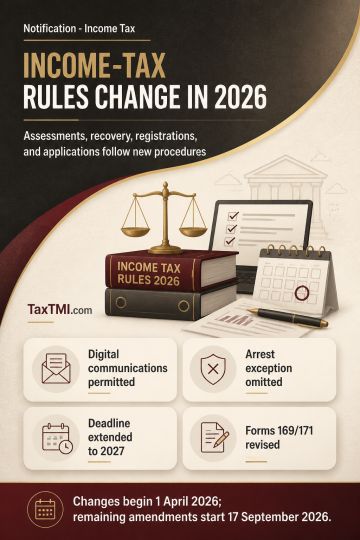
Faceless assessment and registration procedures are updated through electronic communication, revised recovery rules, extended deadlines, and replacem...
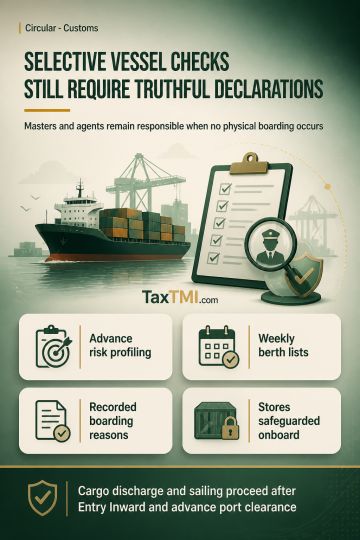
Risk-based selective vessel boarding requires accurate declarations and preserves master and agent liability where physical inspections are not select...
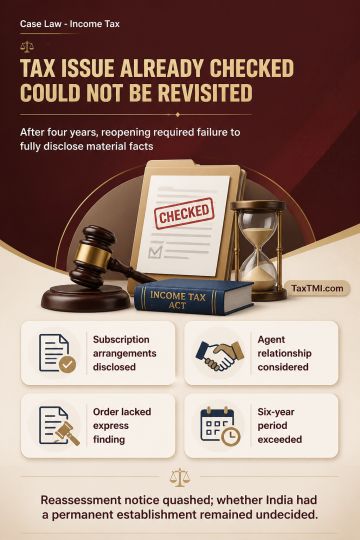
Permanent-establishment reassessment cannot revisit scrutinised disclosures; extended reopening fails without undisclosed material facts and within st...
The appellant (M/s. Sepack) engaged in trading sealing machines manufactured by various independent Decentralized Mother Units (DMUs) during the relevant period. DMUs claimed SSI exemption under Notification No. 08/2003-CE, with clearances below Rs. 150 lakhs. Revenue alleged DMUs were dummy units created and controlled by Sepack to claim SSI exemption benefit. Revenue contended sealing machines attained marketable character after quality checking, branding, labeling, and warranty processes by Sepack, making Sepack the manufacturer. The Tribunal observed DMUs existed physically, with commercial negotiations between Sepack and DMUs for cost optimization. DMUs supplied complete sealing machines to Sepack, which only inspected, branded, packed, and provided warranty before selling to customers. Hence, Revenue failed to establish Sepack manufactured sealing machines by clubbing DMUs' turnover and denying SSI exemption. The confiscation, penalties on Sepack and others were set aside, allowing the appeals. The Tribunal held DMUs were not dummy units of Sepack, and sealing machines supplied were complete, not unfinished goods undergoing manufacturing processes by Sepack.
The appellant (M/s. Sepack) engaged in trading sealing machines manufactured by various independent Decentralized Mother Units (DMUs) during the relevant period. DMUs claimed SSI exemption under Notification No. 08/2003-CE, with clearances below Rs. 150 lakhs. Revenue alleged DMUs were dummy units created and controlled by Sepack to claim SSI exemption benefit. Revenue contended sealing machines attained marketable character after quality checking, branding, labeling, and warranty processes by Sepack, making Sepack the manufacturer. The Tribunal observed DMUs existed physically, with commercial negotiations between Sepack and DMUs for cost optimization. DMUs supplied complete sealing machines to Sepack, which only inspected, branded, packed, and provided warranty before selling to customers. Hence, Revenue failed to establish Sepack manufactured sealing machines by clubbing DMUs' turnover and denying SSI exemption. The confiscation, penalties on Sepack and others were set aside, allowing the appeals. The Tribunal held DMUs were not dummy units of Sepack, and sealing machines supplied were complete, not unfinished goods undergoing manufacturing processes by Sepack.
Note: It is a system-generated summary and is for quick reference only.
 TaxTMI
  TaxTMI