Faceless assessment and registration procedures are updated through electronic communication, revised recovery rules, extended deadlines, and replacem...
Risk-based selective vessel boarding requires accurate declarations and preserves master and agent liability where physical inspections are not select...
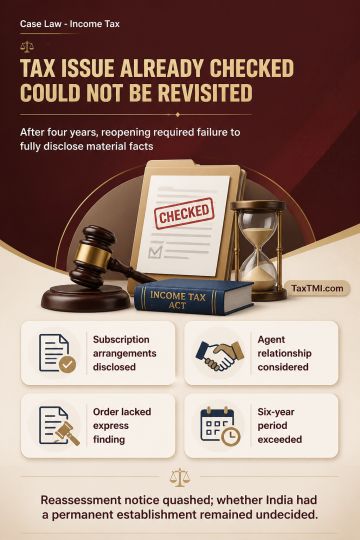
Permanent-establishment reassessment cannot revisit scrutinised disclosures; extended reopening fails without undisclosed material facts and within st...
The Delhi High Court addressed the consolidation of multiple offences in a complaint u/s 138 of the Negotiable Instruments Act, 1881. It interpreted Section 219 of the CrPC in light of a Supreme Court judgment recommending trials for similar offences within 12 months. The court clarified that sending a single notice of demand for multiple dishonored cheques doesn't affect the consolidation of offences. It emphasized the importance of cause of action in maintaining a complaint u/s 138 of the NI Act. The judgment affirmed that multiple cheques from the same transaction can be tried together u/s 220 of the CrPC. The appeal was dismissed.
The Delhi High Court addressed the consolidation of multiple offences in a complaint u/s 138 of the Negotiable Instruments Act, 1881. It interpreted Section 219 of the CrPC in light of a Supreme Court judgment recommending trials for similar offences within 12 months. The court clarified that sending a single notice of demand for multiple dishonored cheques doesn't affect the consolidation of offences. It emphasized the importance of cause of action in maintaining a complaint u/s 138 of the NI Act. The judgment affirmed that multiple cheques from the same transaction can be tried together u/s 220 of the CrPC. The appeal was dismissed.
Note: It is a system-generated summary and is for quick reference only.
 TaxTMI
  TaxTMI