Faceless assessment and registration procedures are updated through electronic communication, revised recovery rules, extended deadlines, and replacem...
Risk-based selective vessel boarding requires accurate declarations and preserves master and agent liability where physical inspections are not select...
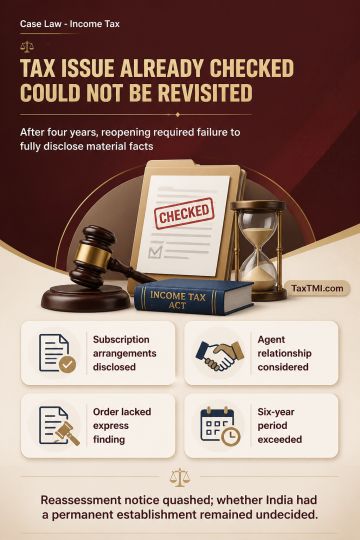
Permanent-establishment reassessment cannot revisit scrutinised disclosures; extended reopening fails without undisclosed material facts and within st...
The case before the Allahabad High Court involved the jurisdiction of the Collector (Stamp) to recall or review an order under Section 47-A of the Indian Stamp Act, 1899, in the context of alleged forgery of documents. The court held that the Collector (Stamp) lacks the power to recall or review an order under Section 47-A as no such authority is provided for in the Act. Quasi-judicial authorities must operate within the statutory framework and cannot exceed their mandate. This limitation on review powers ensures adherence to the principle of separation of powers and upholds the legislative scheme. As the Collector (Stamp) exceeded his authority in conducting the review, the court quashed the impugned order and allowed the writ petition.
The case before the Allahabad High Court involved the jurisdiction of the Collector (Stamp) to recall or review an order under Section 47-A of the Indian Stamp Act, 1899, in the context of alleged forgery of documents. The court held that the Collector (Stamp) lacks the power to recall or review an order under Section 47-A as no such authority is provided for in the Act. Quasi-judicial authorities must operate within the statutory framework and cannot exceed their mandate. This limitation on review powers ensures adherence to the principle of separation of powers and upholds the legislative scheme. As the Collector (Stamp) exceeded his authority in conducting the review, the court quashed the impugned order and allowed the writ petition.
Note: It is a system-generated summary and is for quick reference only.
 TaxTMI
  TaxTMI