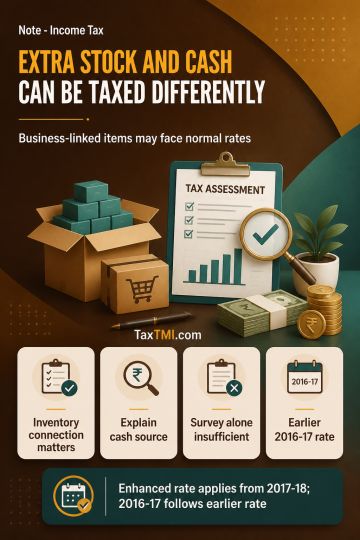
Survey surrender characterisation determines whether mixed excess stock and business-linked cash face normal taxation or special deemed-income taxatio...
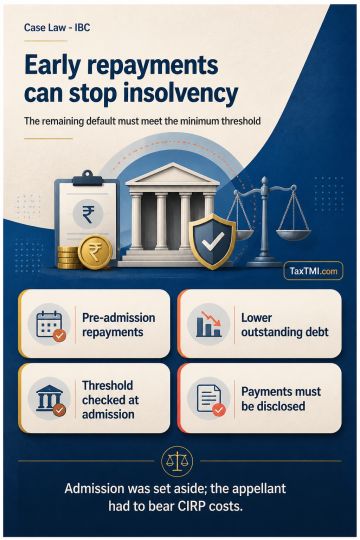
Corporate insolvency admission requires the outstanding default on the date of admission to meet the statutory minimum threshold. Part-payments made before admission reduce the debt in default for this purpose, and financial creditors must disclose those payments to the Adjudicating Authority. Where the remaining default falls below the threshold, admission of the insolvency application cannot be sustained. The admission was set aside because pre-admission repayments reduced the outstanding default below the applicable minimum, and CIRP costs were directed to be borne by the appellant.
Corporate insolvency admission requires the outstanding default on the date of admission to meet the statutory minimum threshold. Part-payments made before admission reduce the debt in default for this purpose, and financial creditors must disclose those payments to the Adjudicating Authority. Where the remaining default falls below the threshold, admission of the insolvency application cannot be sustained. The admission was set aside because pre-admission repayments reduced the outstanding default below the applicable minimum, and CIRP costs were directed to be borne by the appellant.
Note: It is a system-generated summary and is for quick reference only.
 TaxTMI
  TaxTMI