Survey surrender characterisation determines whether mixed excess stock and business-linked cash face normal taxation or special deemed-income taxatio...
Preliminary reassessment proceedings under Sections 148A(1) and...
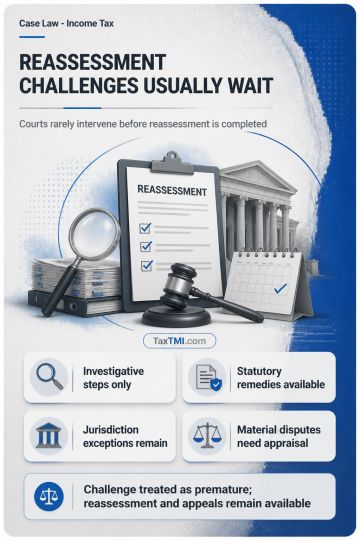
Preliminary reassessment proceedings generally require statutory remedies unless jurisdiction is wholly absent or mandatory conditions are patently breached.
Contents
Summary
Note
Bookmark
Share
✓ Copied successfully !
Print
Print Options
For full text, please login
Login to TaxTMI
Verification Pending
The Email Id has not been verified. Click on the link we have sent on
Preliminary reassessment proceedings under Sections 148A(1) and 148A(3), followed by a notice under Section 148, are investigative steps that do not determine tax liability. Challenges concerning search-based information, applicability of Section 152(3), and sanction under Section 151 should ordinarily be examined during reassessment and through statutory appellate remedies. Writ intervention at this threshold is exceptional, limited to total absence of jurisdiction or a patent breach of a mandatory pre-condition; disputes requiring appraisal of material are not ordinarily examinable under Article 226. The challenge to reassessment initiation was therefore treated as premature, with recourse left to reassessment and appellate processes.
Preliminary reassessment proceedings under Sections 148A(1) and 148A(3), followed by a notice under Section 148, are investigative steps that do not determine tax liability. Challenges concerning search-based information, applicability of Section 152(3), and sanction under Section 151 should ordinarily be examined during reassessment and through statutory appellate remedies. Writ intervention at this threshold is exceptional, limited to total absence of jurisdiction or a patent breach of a mandatory pre-condition; disputes requiring appraisal of material are not ordinarily examinable under Article 226. The challenge to reassessment initiation was therefore treated as premature, with recourse left to reassessment and appellate processes.
Note: It is a system-generated summary and is for quick reference only.
 TaxTMI
  TaxTMI