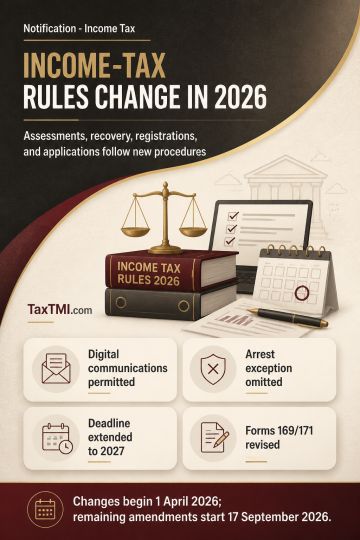
Faceless assessment and registration procedures are updated through electronic communication, revised recovery rules, extended deadlines, and replacem...
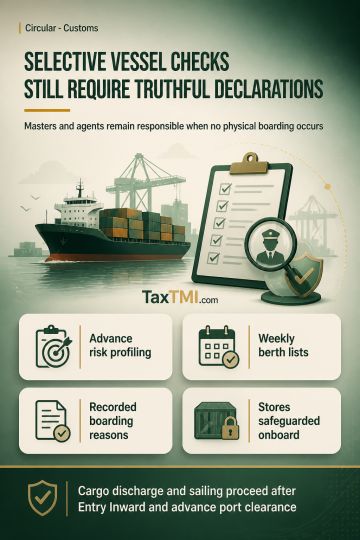
Risk-based selective vessel boarding requires accurate declarations and preserves master and agent liability where physical inspections are not select...
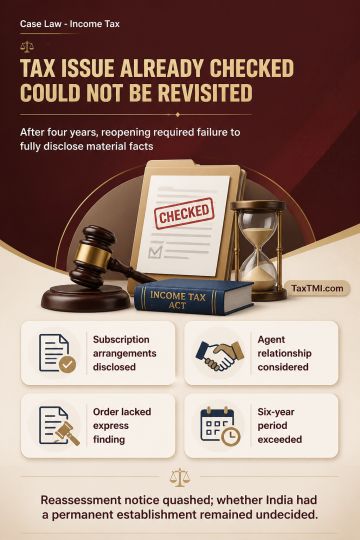
Permanent-establishment reassessment cannot revisit scrutinised disclosures; extended reopening fails without undisclosed material facts and within st...
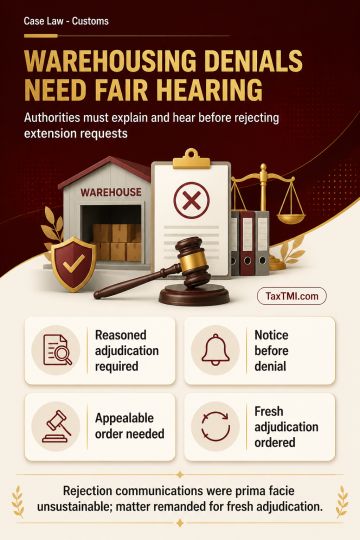
Extension or rejection of the warehousing period under the sufficient-cause standard is quasi-judicial, requiring a judicial approach and an opportunity of hearing. The notes state that a denial must follow adjudicatory proceedings and be communicated through an appealable, reasoned order. Communications that merely convey rejection without findings or justification do not satisfy principles of natural justice. The Supreme Court's COVID-19 limitation extension is also noted. On the stated facts, the rejection communications were considered prima facie unsustainable; the matter was remanded for fresh adjudication after disclosure of proposed reasons, opportunity to reply and personal hearing, while consequential proceedings remained in abeyance.
Extension or rejection of the warehousing period under the sufficient-cause standard is quasi-judicial, requiring a judicial approach and an opportunity of hearing. The notes state that a denial must follow adjudicatory proceedings and be communicated through an appealable, reasoned order. Communications that merely convey rejection without findings or justification do not satisfy principles of natural justice. The Supreme Court's COVID-19 limitation extension is also noted. On the stated facts, the rejection communications were considered prima facie unsustainable; the matter was remanded for fresh adjudication after disclosure of proposed reasons, opportunity to reply and personal hearing, while consequential proceedings remained in abeyance.
Note: It is a system-generated summary and is for quick reference only.
 TaxTMI
  TaxTMI