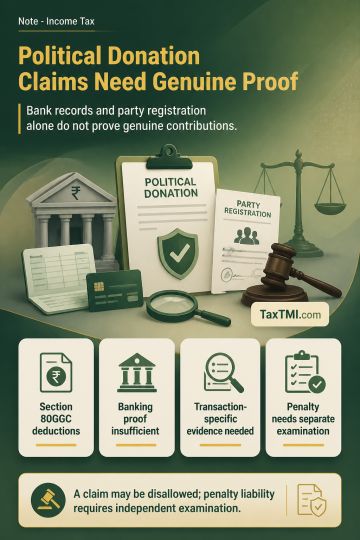
Political contribution deductions require genuine transactions; banking records and party registration alone cannot defeat evidence of accommodation e...
Post-death GST liability permits fresh proceedings against legal representatives, while discontinued-business recovery remains limited to the inherite...
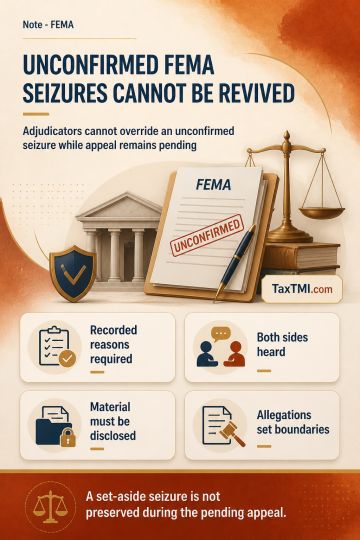
Non-confirmation of FEMA seizure prevents adjudicators from overriding pending appellate findings on recorded reasons and suspected foreign asset hold...
An ECIR under the PMLA is an internal departmental document with no statutory status, so its quashing is not ordinarily maintainable unless the predicate offence itself is quashed; the challenge here was also premature because the alleged overlap with an earlier ECIR was not established. A subsequent ECIR or parallel investigation is permissible where it concerns a larger conspiracy, additional offences, or different accused, and is not barred as a second FIR. Statements recorded under Section 50 of the PMLA were not invalidated because Article 20(3), Section 164 CrPC safeguards, and Miranda-type protections apply only once a person is an accused or formally arrested. Section 50 summons and Section 66(2) information-sharing were upheld as part of lawful investigation, and a private person can be proceeded against for corruption-linked offences.
An ECIR under the PMLA is an internal departmental document with no statutory status, so its quashing is not ordinarily maintainable unless the predicate offence itself is quashed; the challenge here was also premature because the alleged overlap with an earlier ECIR was not established. A subsequent ECIR or parallel investigation is permissible where it concerns a larger conspiracy, additional offences, or different accused, and is not barred as a second FIR. Statements recorded under Section 50 of the PMLA were not invalidated because Article 20(3), Section 164 CrPC safeguards, and Miranda-type protections apply only once a person is an accused or formally arrested. Section 50 summons and Section 66(2) information-sharing were upheld as part of lawful investigation, and a private person can be proceeded against for corruption-linked offences.
Note: It is a system-generated summary and is for quick reference only.
 TaxTMI
  TaxTMI