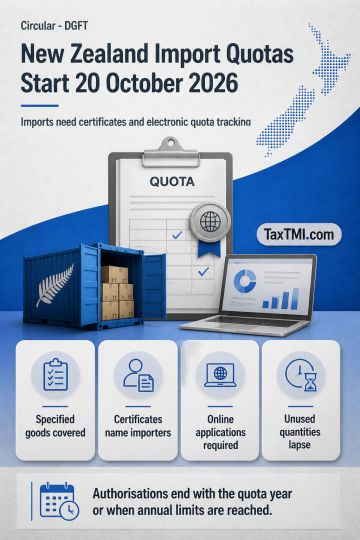
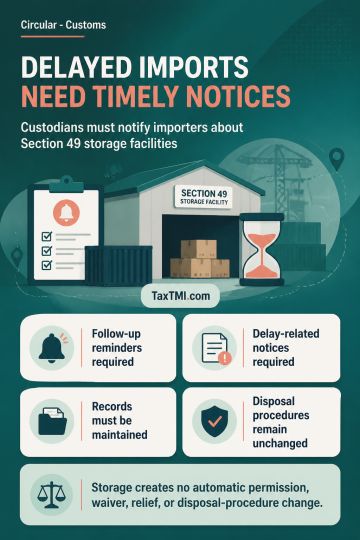
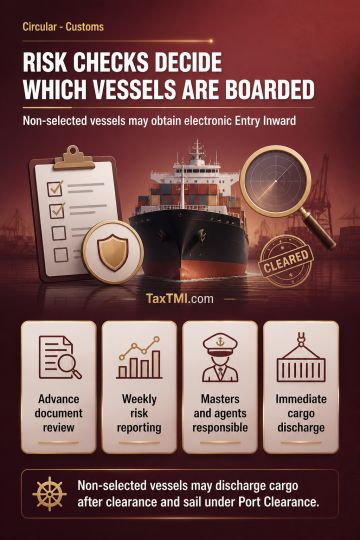
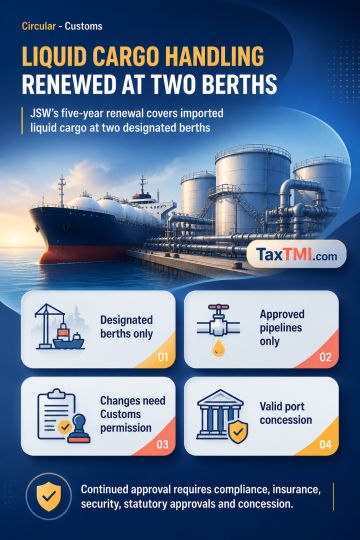
Tariff rate quota authorisations govern preferential imports of specified New Zealand goods through export certification and electronic customs debiti...
Electronic Continuity Bond Registration replaces manual container permissions, with quarterly reporting and re-export monitoring for duty-free contain...
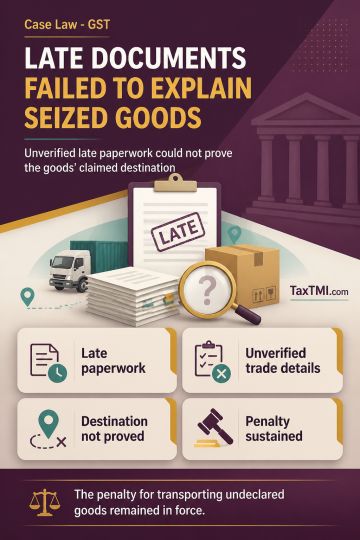
Delayed transport documents failed to validate intercepted goods, sustaining transit-state penalties where the claimed interstate destination remained...
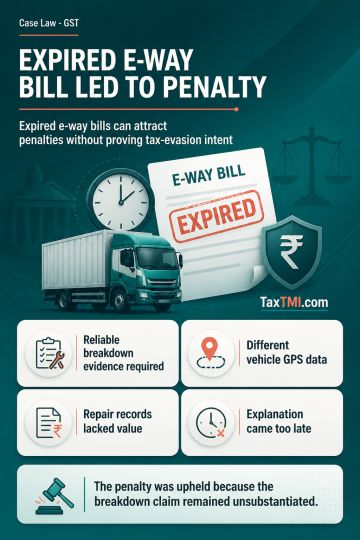
Section 129(1)(a) of the GST Act treats transportation in contravention of the Act or Rules, including movement after expiry of an e-way bill, as attracting civil penalty without requiring proof of intent to evade tax. A claimed vehicle breakdown must be established by reliable material. GPS data concerning another vehicle, repair records lacking evidentiary value, and an explanation not contemporaneously disclosed do not substantiate the claim. Guidance that does not address movement with an expired e-way bill provides no justification; on these facts, the penalty was upheld.
Section 129(1)(a) of the GST Act treats transportation in contravention of the Act or Rules, including movement after expiry of an e-way bill, as attracting civil penalty without requiring proof of intent to evade tax. A claimed vehicle breakdown must be established by reliable material. GPS data concerning another vehicle, repair records lacking evidentiary value, and an explanation not contemporaneously disclosed do not substantiate the claim. Guidance that does not address movement with an expired e-way bill provides no justification; on these facts, the penalty was upheld.
Note: It is a system-generated summary and is for quick reference only.
 TaxTMI
 TaxTMI