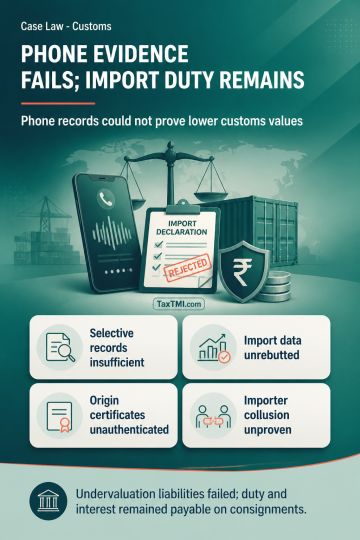
Mobile-phone electronic evidence failed to establish customs undervaluation, while duty survived on non-authentic origin certificates without importer...
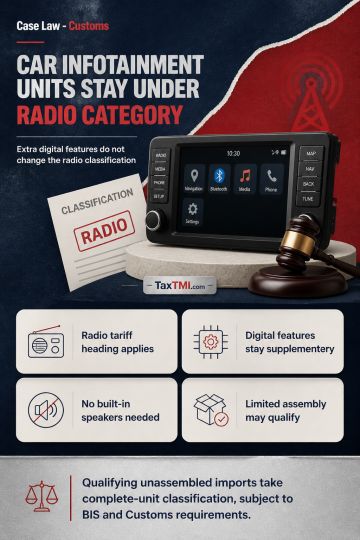
Automotive radio classification treats integrated infotainment features as supplementary, placing complete and qualifying unassembled units under the ...
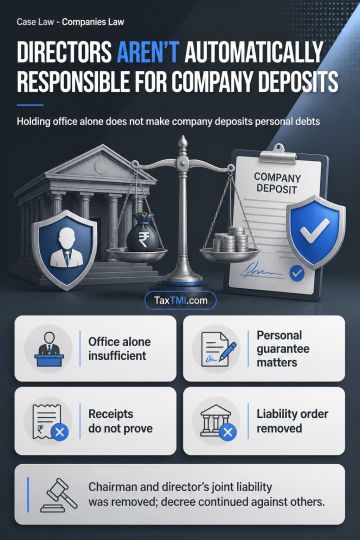
Separate corporate personality prevents directors from being personally liable for company deposits without a guarantee or independent legal undertaki...
Cross-segment derivatives manipulation: integrated order patterns can support interim restraints, while director liability requires responsibility, co...
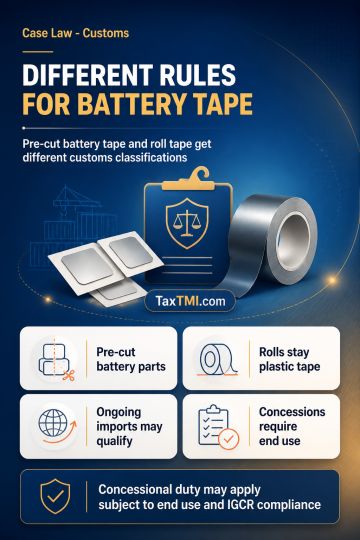
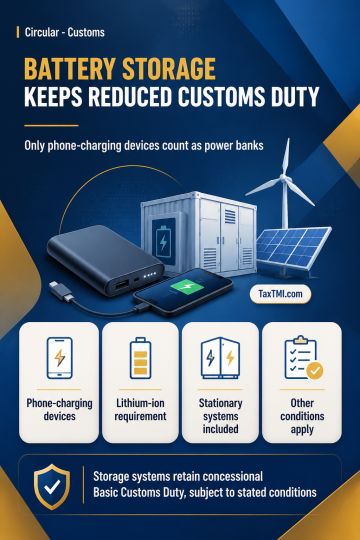
Power bank definition limits the customs-duty exclusion, preserving concessional treatment for stationary, grid-scale and industrial battery storage s...
Anti-profiteering liability following a GST rate reduction may...
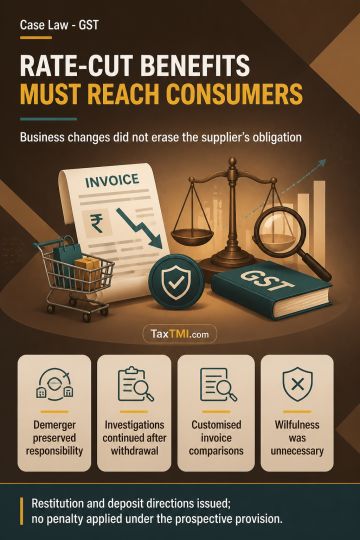
Anti-profiteering obligations survive business demerger, complaint withdrawal, and customized supply arrangements where rate-reduction benefits are not passed on.
Contents
Summary
Note
Bookmark
Share
✓ Copied successfully !
Print
Print Options
For full text, please login
Login to TaxTMI
Verification Pending
The Email Id has not been verified. Click on the link we have sent on
Anti-profiteering liability following a GST rate reduction may apply despite a business demerger and a post-reduction registration where transactional evidence establishes the supplier's nexus to affected supplies. Investigation may extend beyond the original complaint and continue after its withdrawal because the regime serves consumer welfare. For customised lump-sum supplies, invoice-wise base-price comparison is permissible if rational, evidence-based and reconciled; the computation was accepted. Wilful retention need not be proved, although non-passing of the benefit must be established. The supplier was found to have breached the pass-through obligation and was subject to restitution and deposit directions; no penalty applied because the penal provision operated only prospectively.
Anti-profiteering liability following a GST rate reduction may apply despite a business demerger and a post-reduction registration where transactional evidence establishes the supplier's nexus to affected supplies. Investigation may extend beyond the original complaint and continue after its withdrawal because the regime serves consumer welfare. For customised lump-sum supplies, invoice-wise base-price comparison is permissible if rational, evidence-based and reconciled; the computation was accepted. Wilful retention need not be proved, although non-passing of the benefit must be established. The supplier was found to have breached the pass-through obligation and was subject to restitution and deposit directions; no penalty applied because the penal provision operated only prospectively.
Note: It is a system-generated summary and is for quick reference only.
 TaxTMI
  TaxTMI
 of 4913