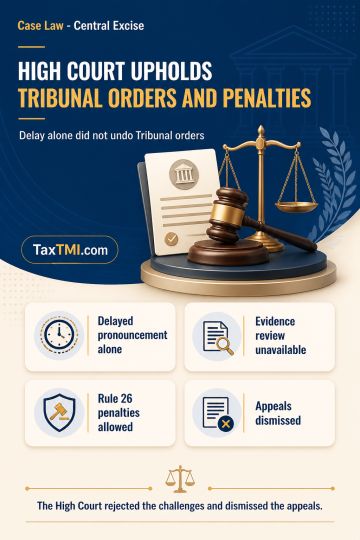
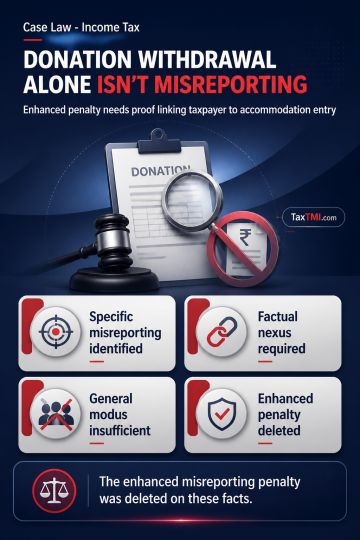
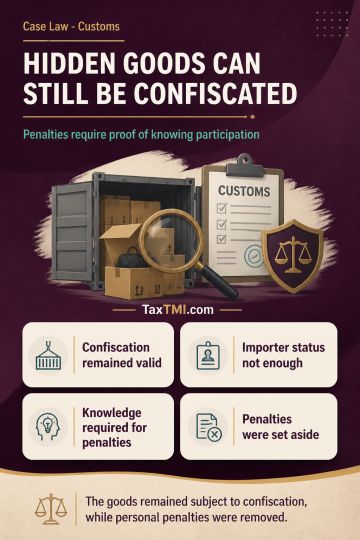
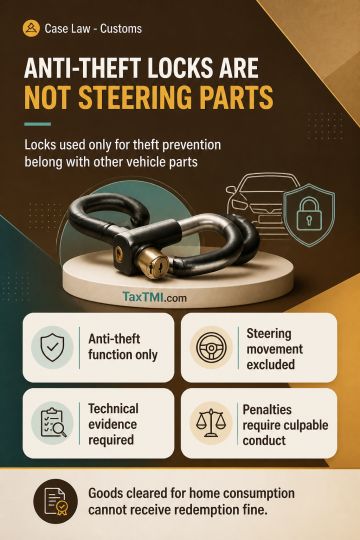
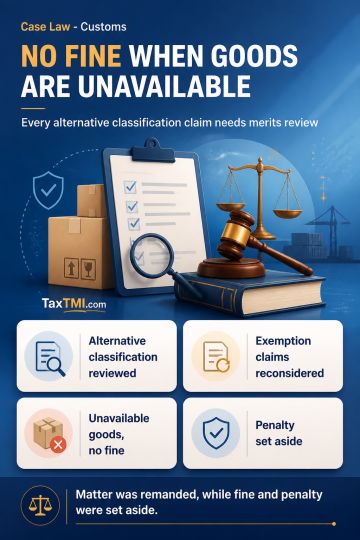
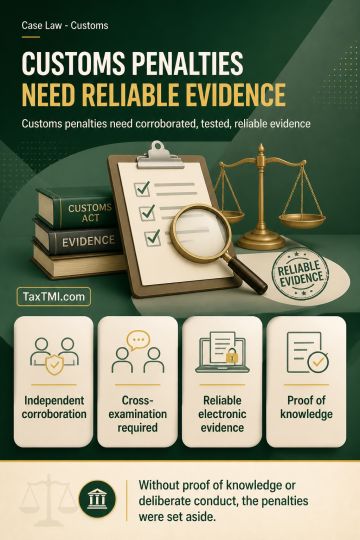
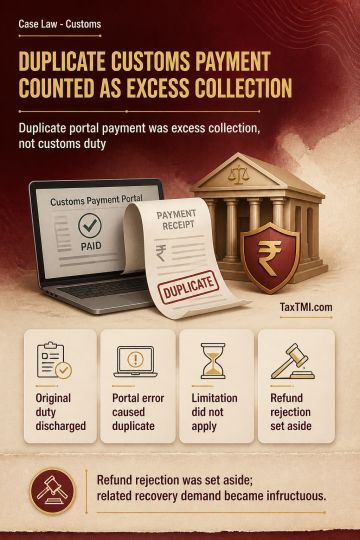
Delayed judgment pronouncement alone does not invalidate Tribunal orders, while rectification cannot reopen evidence or negate confiscation-related pe...
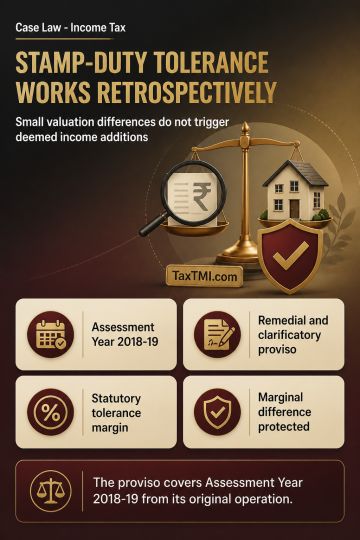
Agricultural-land reinvestment qualifies when transfer consideration precedes replacement purchase, while unexamined claims may be reassessed on escap...
Bona fide public fixed-deposit explanations prevent concealment penalties where unexplained-credit additions lack independent evidence of undisclosed ...
Factory-consumption condition restricts solar module parts exemption and excludes imported aluminium profiles fabricated outside the production factor...
Page of 4907
Press 'Enter' after typing page number.
81 to 100 of 98136 Results
❮
❯
❯❯
0 / 200
Expand Note
Add to Folder
No Folders have been created
+
Are you sure you want to delete "My most important" ?
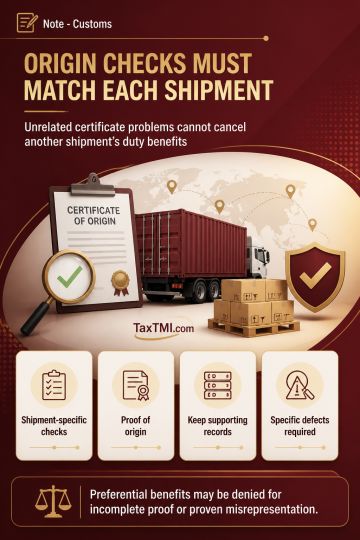
Preferential customs duty under the ASEAN-India arrangement requires proof that goods satisfy the applicable origin rules; a country-of-origin certificate does not remove the importer's duty of reasonable care. Origin verification must be certificate- and consignment-specific: an adverse foreign communication concerning identified unauthentic certificates cannot, without evidence linking other certificates to the defect or showing their cancellation or revocation, justify denial of benefits for those certificates. Importers must retain origin-related information and supporting records, while customs must undertake focused verification and identify the precise alleged defect. Preferential treatment may be denied for incomplete or non-conforming proof, or where origin requirements or misrepresentation are independently established.
Preferential customs duty under the ASEAN-India arrangement requires proof that goods satisfy the applicable origin rules; a country-of-origin certificate does not remove the importer's duty of reasonable care. Origin verification must be certificate- and consignment-specific: an adverse foreign communication concerning identified unauthentic certificates cannot, without evidence linking other certificates to the defect or showing their cancellation or revocation, justify denial of benefits for those certificates. Importers must retain origin-related information and supporting records, while customs must undertake focused verification and identify the precise alleged defect. Preferential treatment may be denied for incomplete or non-conforming proof, or where origin requirements or misrepresentation are independently established.
Note: It is a system-generated summary and is for quick reference only.
 TaxTMI
  TaxTMI
 of 4907