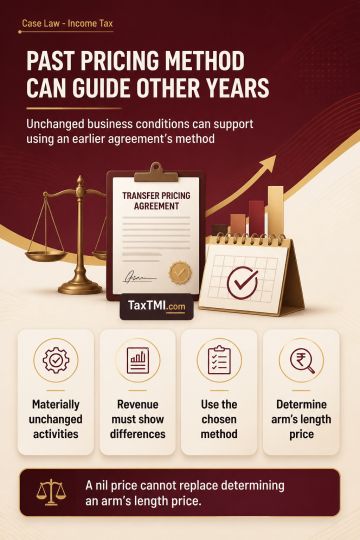
Advance pricing agreement methodology can guide benchmarking for non-covered years when functions, assets, risks and activities remain materially unch...
Tax-audit exemption for substantially State-funded educational universities prevents audit-failure penalties where income qualifies for statutory exem...
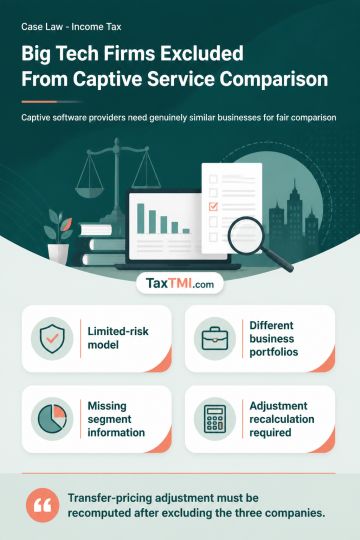
Functional, asset and risk analysis excludes diversified technology companies from captive software development comparables under cost-plus arrangemen...
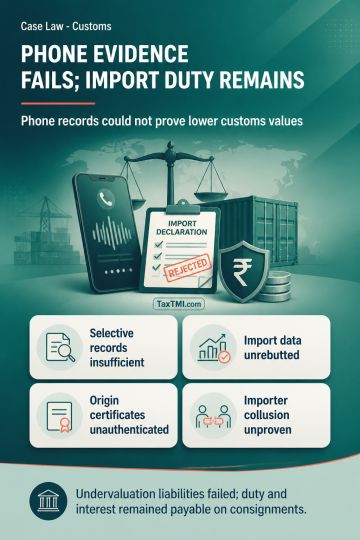
Mobile-phone electronic evidence failed to establish customs undervaluation, while duty survived on non-authentic origin certificates without importer...
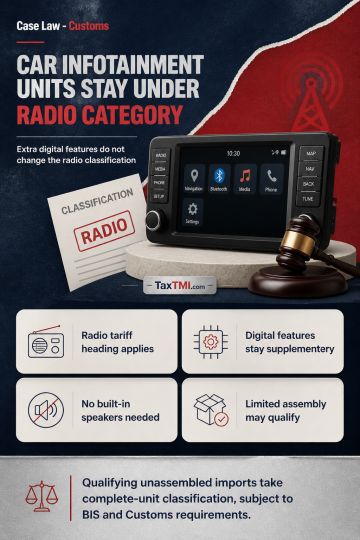
Automotive radio classification treats integrated infotainment features as supplementary, placing complete and qualifying unassembled units under the ...
Separate corporate personality prevents directors from being personally liable for company deposits without a guarantee or independent legal undertaki...
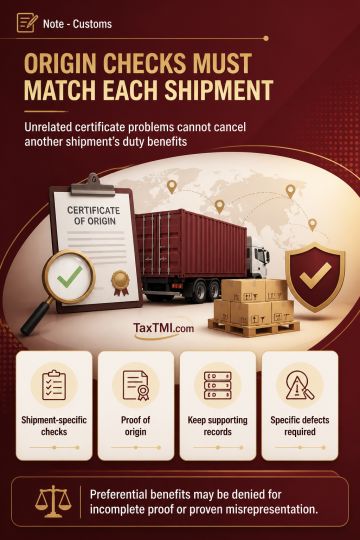
Preferential customs duty under the ASEAN-India arrangement requires proof that goods satisfy the applicable origin rules; a country-of-origin certificate does not remove the importer's duty of reasonable care. Origin verification must be certificate- and consignment-specific: an adverse foreign communication concerning identified unauthentic certificates cannot, without evidence linking other certificates to the defect or showing their cancellation or revocation, justify denial of benefits for those certificates. Importers must retain origin-related information and supporting records, while customs must undertake focused verification and identify the precise alleged defect. Preferential treatment may be denied for incomplete or non-conforming proof, or where origin requirements or misrepresentation are independently established.
Preferential customs duty under the ASEAN-India arrangement requires proof that goods satisfy the applicable origin rules; a country-of-origin certificate does not remove the importer's duty of reasonable care. Origin verification must be certificate- and consignment-specific: an adverse foreign communication concerning identified unauthentic certificates cannot, without evidence linking other certificates to the defect or showing their cancellation or revocation, justify denial of benefits for those certificates. Importers must retain origin-related information and supporting records, while customs must undertake focused verification and identify the precise alleged defect. Preferential treatment may be denied for incomplete or non-conforming proof, or where origin requirements or misrepresentation are independently established.
Note: It is a system-generated summary and is for quick reference only.
 TaxTMI
 TaxTMI

 of 4915