Functional, asset and risk analysis excludes diversified technology companies from captive software development comparables under cost-plus arrangemen...
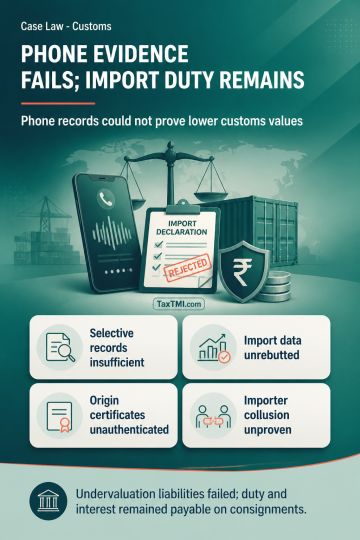
Mobile-phone electronic evidence failed to establish customs undervaluation, while duty survived on non-authentic origin certificates without importer...
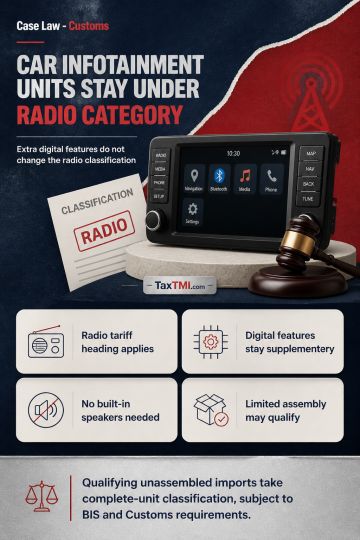
Automotive radio classification treats integrated infotainment features as supplementary, placing complete and qualifying unassembled units under the ...
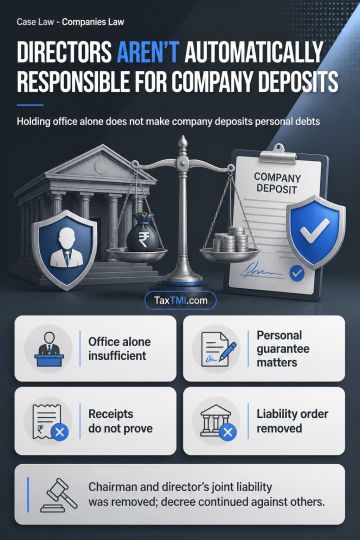
Separate corporate personality prevents directors from being personally liable for company deposits without a guarantee or independent legal undertaki...
Cross-segment derivatives manipulation: integrated order patterns can support interim restraints, while director liability requires responsibility, co...
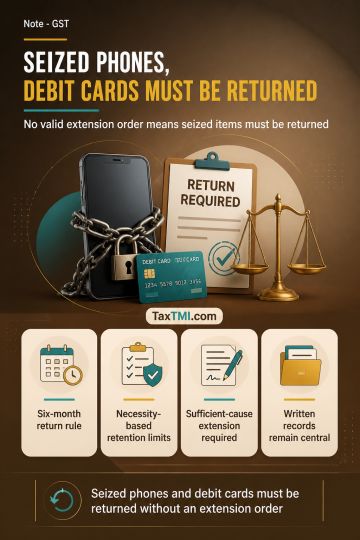
Section 67 of the CGST Act limits retention of seized articles through necessity-based and time-bound safeguards. Documents, books and things may be retained only while necessary for examination, inquiry or proceedings, and material not relied upon for a notice must be returned within the statutory period. The High Court applied the six-month return rule to seized mobile phones and bank debit cards and required their return because no extension order existed. Continued investigation alone cannot replace an extension based on sufficient cause by the proper officer, for no more than a further six months. Written authorisation, seizure orders and inventories remain central to assessing whether retention is lawful.
Section 67 of the CGST Act limits retention of seized articles through necessity-based and time-bound safeguards. Documents, books and things may be retained only while necessary for examination, inquiry or proceedings, and material not relied upon for a notice must be returned within the statutory period. The High Court applied the six-month return rule to seized mobile phones and bank debit cards and required their return because no extension order existed. Continued investigation alone cannot replace an extension based on sufficient cause by the proper officer, for no more than a further six months. Written authorisation, seizure orders and inventories remain central to assessing whether retention is lawful.
Note: It is a system-generated summary and is for quick reference only.
 TaxTMI
  TaxTMI
 of 4910