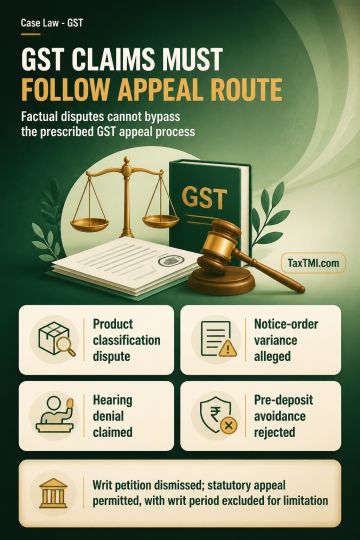
Alternative statutory remedy under GST bars writ challenge where classification, notice variance, and hearing disputes require factual appellate revie...
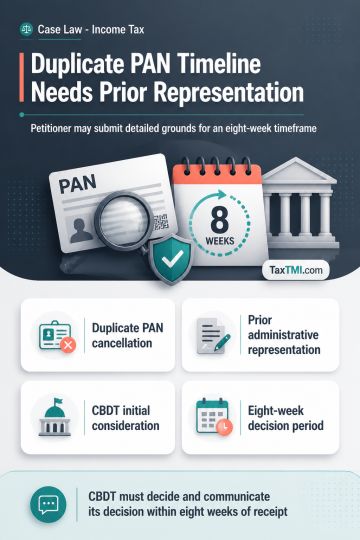
Duplicate PAN cancellation timeframe requires prior administrative representation before judicial intervention, ensuring a time-bound decision on the ...
Natural justice and pre-CIRP labour awards protect termination compensation, permitting withdrawal of court deposits despite later insolvency resoluti...
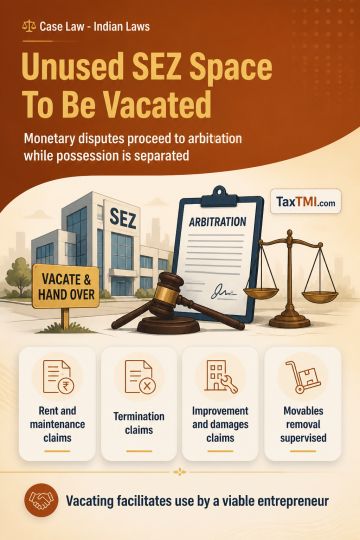
Arbitration of SEZ sub-lease monetary claims preserves rent, maintenance, termination, improvements and damages disputes while unused premises are vac...
Scientific research approval grants a research association tax recognition, subject to annual donor reporting, certification, and regulatory complianc...
Page of 4915
Press 'Enter' after typing page number.
621 to 640 of 98300 Results
❮
❯
❯❯
0 / 200
Expand Note
Add to Folder
No Folders have been created
+
Are you sure you want to delete "My most important" ?
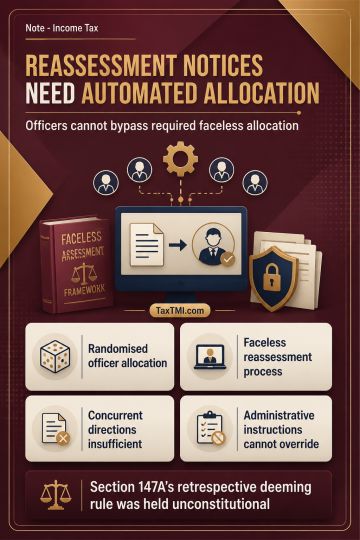
Section 151A and the e-Assessment of Income Escaping Assessment Scheme, 2022 require randomised automated allocation for reassessment functions, including the section 148A process and issuance of section 148 notices. General concurrent-jurisdiction directions cannot permit a jurisdictional Assessing Officer to bypass the prescribed faceless allocation, because allocation determines the officer's statutory competence. Risk-based selection of a matter is distinct from algorithmic allocation of the officer. Section 147A's retrospective deeming rule was held unconstitutional because it did not amend the continuing statutory and scheme-based requirements for automated allocation, and therefore did not remove the legal foundation of prior jurisdictional rulings. Administrative instructions cannot override the Act or a valid notified scheme.
Section 151A and the e-Assessment of Income Escaping Assessment Scheme, 2022 require randomised automated allocation for reassessment functions, including the section 148A process and issuance of section 148 notices. General concurrent-jurisdiction directions cannot permit a jurisdictional Assessing Officer to bypass the prescribed faceless allocation, because allocation determines the officer's statutory competence. Risk-based selection of a matter is distinct from algorithmic allocation of the officer. Section 147A's retrospective deeming rule was held unconstitutional because it did not amend the continuing statutory and scheme-based requirements for automated allocation, and therefore did not remove the legal foundation of prior jurisdictional rulings. Administrative instructions cannot override the Act or a valid notified scheme.
Note: It is a system-generated summary and is for quick reference only.
 TaxTMI
 TaxTMI

 of 4915