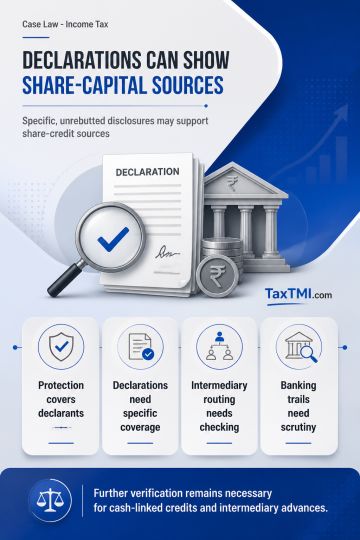
Income Declaration Scheme declarations can evidence share-capital sources, while round-tripped funds and cash-linked credits require further verificat...
Permanent establishment tests: independent subsidiary premises and principal-to-principal dealings did not create Indian taxability for offshore suppl...
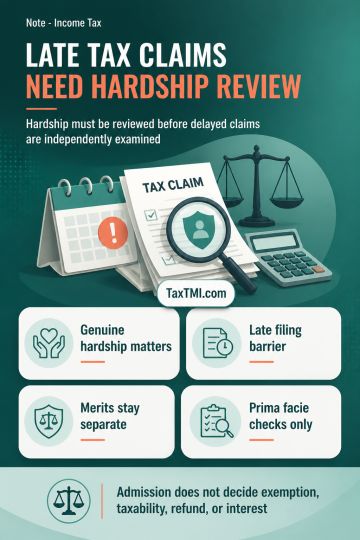
Section 119(2)(b) permits exceptional admission of a delayed exemption, deduction or refund claim after the revised-return period under Section 139(5) has expired, where this is necessary to avoid genuine hardship. Condonation removes only the procedural bar; exemption, taxability, refund and interest remain subject to independent merits determination under the applicable provisions. Genuine hardship requires a fact-sensitive assessment of bona fides, promptness, the nature of the omission and the practical consequence of refusal. Prima facie verification may test whether the claim is genuine and supportable, but must not become a final adjudication. Comparable decisions may establish that a claim is arguable, while factual verification and substantive scrutiny remain available after admission.
Section 119(2)(b) permits exceptional admission of a delayed exemption, deduction or refund claim after the revised-return period under Section 139(5) has expired, where this is necessary to avoid genuine hardship. Condonation removes only the procedural bar; exemption, taxability, refund and interest remain subject to independent merits determination under the applicable provisions. Genuine hardship requires a fact-sensitive assessment of bona fides, promptness, the nature of the omission and the practical consequence of refusal. Prima facie verification may test whether the claim is genuine and supportable, but must not become a final adjudication. Comparable decisions may establish that a claim is arguable, while factual verification and substantive scrutiny remain available after admission.
Note: It is a system-generated summary and is for quick reference only.
 TaxTMI
  TaxTMI
 of 4910