Advance pricing agreement methodology can guide benchmarking for non-covered years when functions, assets, risks and activities remain materially unch...
Tax-audit exemption for substantially State-funded educational universities prevents audit-failure penalties where income qualifies for statutory exem...
Functional, asset and risk analysis excludes diversified technology companies from captive software development comparables under cost-plus arrangemen...
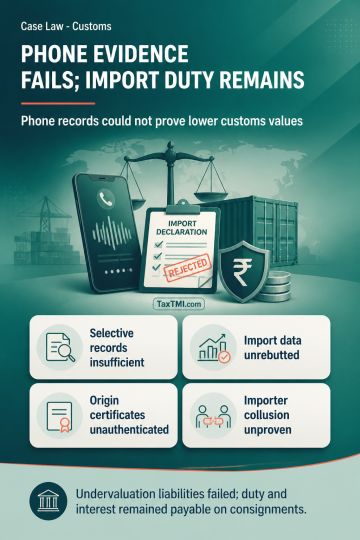
Mobile-phone electronic evidence failed to establish customs undervaluation, while duty survived on non-authentic origin certificates without importer...
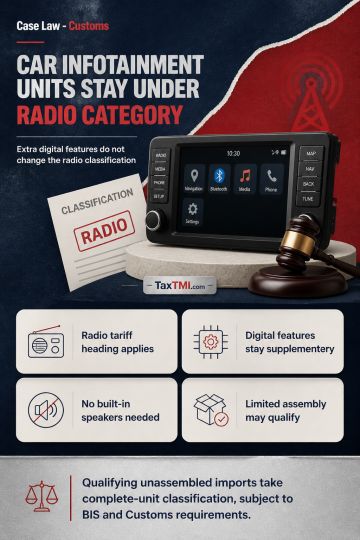
Automotive radio classification treats integrated infotainment features as supplementary, placing complete and qualifying unassembled units under the ...
Separate corporate personality prevents directors from being personally liable for company deposits without a guarantee or independent legal undertaki...
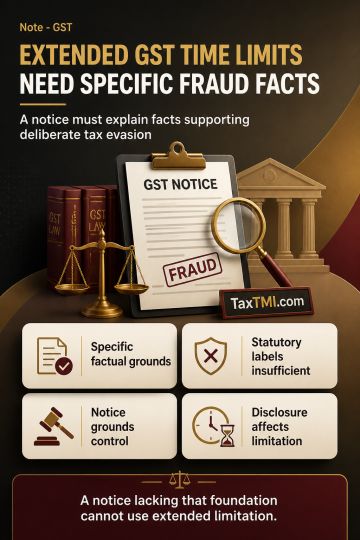
Section 74 of the CGST Act permits the extended limitation route only where a show cause notice states factual grounds showing that tax short-payment, erroneous refund, or wrongful input tax credit arose by reason of fraud, wilful misstatement, or suppression intended to evade tax. Bare statutory labels, audit objections, later affidavits, or new grounds in an order cannot cure a notice lacking that jurisdictional foundation. Section 75(7) confines confirmation to grounds specified in the notice, while Section 75(2) may deem a validly founded Section 74 notice to be under Section 73 if aggravated conduct is not established. Deliberate conduct, causal nexus, and taxpayer disclosure are central to extended limitation.
Section 74 of the CGST Act permits the extended limitation route only where a show cause notice states factual grounds showing that tax short-payment, erroneous refund, or wrongful input tax credit arose by reason of fraud, wilful misstatement, or suppression intended to evade tax. Bare statutory labels, audit objections, later affidavits, or new grounds in an order cannot cure a notice lacking that jurisdictional foundation. Section 75(7) confines confirmation to grounds specified in the notice, while Section 75(2) may deem a validly founded Section 74 notice to be under Section 73 if aggravated conduct is not established. Deliberate conduct, causal nexus, and taxpayer disclosure are central to extended limitation.
Note: It is a system-generated summary and is for quick reference only.
 TaxTMI
  TaxTMI
 of 4901