Stock-in-trade transfer taxability follows possession and consideration, not later conveyance registration, limiting deemed-value provisions to the ac...
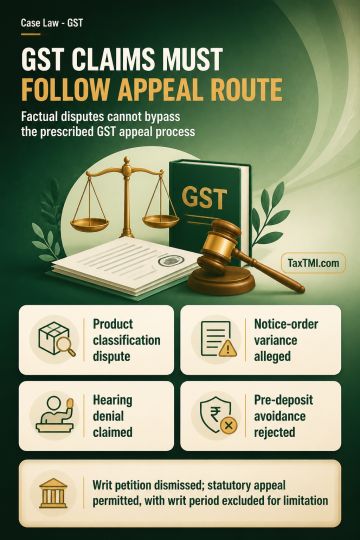
Alternative statutory remedy under GST bars writ challenge where classification, notice variance, and hearing disputes require factual appellate revie...
Duplicate PAN cancellation timeframe requires prior administrative representation before judicial intervention, ensuring a time-bound decision on the ...
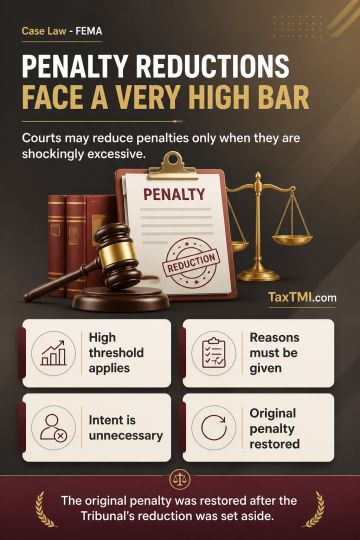
Judicial review of the quantum of a FERA penalty permits interference on proportionality grounds only where the sanction is grossly excessive, unduly harsh, or so disproportionate that it shocks the court's conscience. A Tribunal cannot reduce a penalty without demonstrating and giving reasons that this high threshold is met; its reduction was therefore unsustainable. FERA penalty adjudication follows proof of breach of a statutory civil obligation, without requiring mens rea. Absence of criminal intent or monetary gain does not legally justify a reduced penalty. The appellate outcome restored the penalty imposed by the Adjudicating Authority after setting aside the Tribunal's reduction.
Judicial review of the quantum of a FERA penalty permits interference on proportionality grounds only where the sanction is grossly excessive, unduly harsh, or so disproportionate that it shocks the court's conscience. A Tribunal cannot reduce a penalty without demonstrating and giving reasons that this high threshold is met; its reduction was therefore unsustainable. FERA penalty adjudication follows proof of breach of a statutory civil obligation, without requiring mens rea. Absence of criminal intent or monetary gain does not legally justify a reduced penalty. The appellate outcome restored the penalty imposed by the Adjudicating Authority after setting aside the Tribunal's reduction.
Note: It is a system-generated summary and is for quick reference only.
 TaxTMI
  TaxTMI
 of 4913