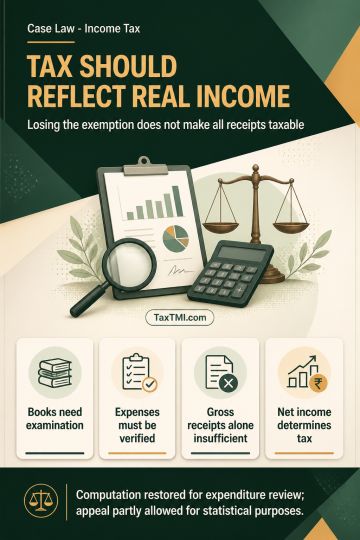
Third-party loose sheets require reliable nexus before supporting unexplained expenditure additions; presumptions do not establish payer identity or o...
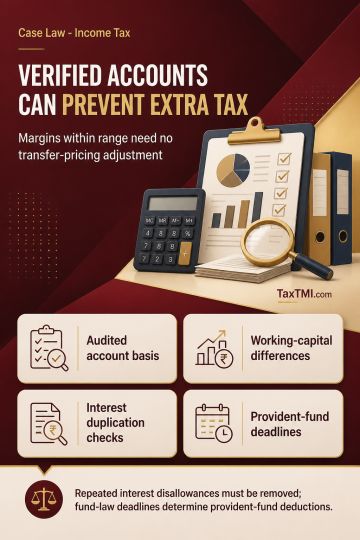
TNMM comparability using audited accounts and working-capital adjustments can eliminate unwarranted transfer-pricing additions where verified margins ...
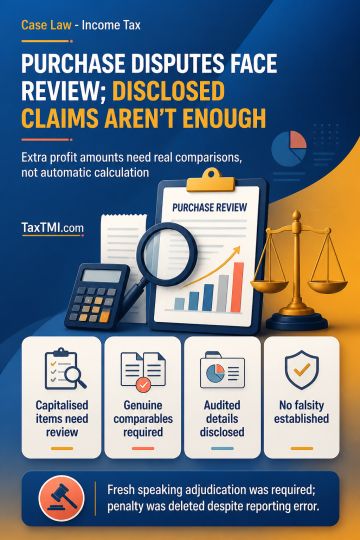
Gross-profit additions on disputed purchases require reasoned appellate determination; disclosed claims alone do not support inaccurate-particulars pe...
Limitation after transfer-pricing remand: fresh TPO reference did not extend the assessment deadline, rendering the consequential assessment time-barr...
Interim judicial restraint on tax deduction prevents default, while supporting reasonable cause and penalty deletion for foreign-leg LFC reimbursement...
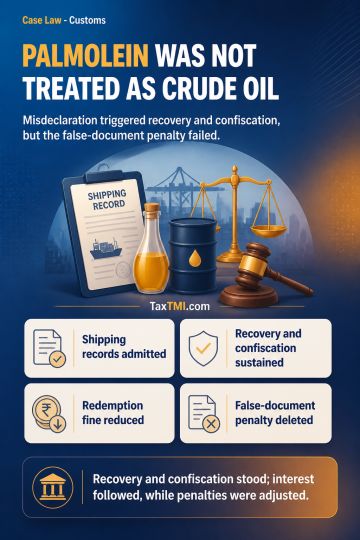
Palmolein classification defeated the crude-oil concession; material misdeclaration sustained recovery and confiscation, while separate false-document...
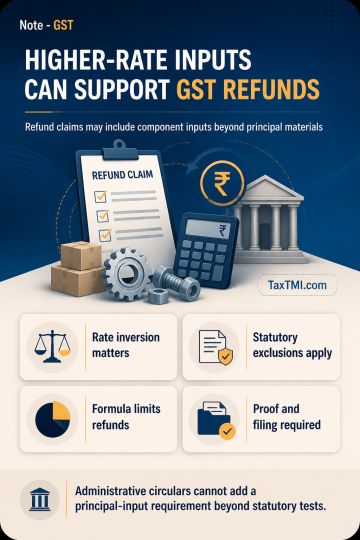
Refund of accumulated ITC under an inverted duty structure depends on whether higher-rated input goods cause credit accumulation relative to output supplies, not solely on whether the principal raw material and output carry the same rate. Section 54(3)(ii) permits the claim subject to notified exclusions, credit eligibility, and proof of a causal nexus between qualifying inputs and accumulation. Input services and capital goods are excluded from Net ITC for the Rule 89(5) calculation. Rule 89(5) limits refundable quantum, while the prescribed process requires electronic filing, invoice details, ledger debit and verification. Administrative circulars cannot add a principal-input condition beyond the statutory test; claimants must substantiate rate inversion, manufacturing nexus, computation and procedural compliance.
Refund of accumulated ITC under an inverted duty structure depends on whether higher-rated input goods cause credit accumulation relative to output supplies, not solely on whether the principal raw material and output carry the same rate. Section 54(3)(ii) permits the claim subject to notified exclusions, credit eligibility, and proof of a causal nexus between qualifying inputs and accumulation. Input services and capital goods are excluded from Net ITC for the Rule 89(5) calculation. Rule 89(5) limits refundable quantum, while the prescribed process requires electronic filing, invoice details, ledger debit and verification. Administrative circulars cannot add a principal-input condition beyond the statutory test; claimants must substantiate rate inversion, manufacturing nexus, computation and procedural compliance.
Note: It is a system-generated summary and is for quick reference only.
 TaxTMI
  TaxTMI
 of 4901