Automotive radio classification treats integrated infotainment features as supplementary, placing complete and qualifying unassembled units under the ...
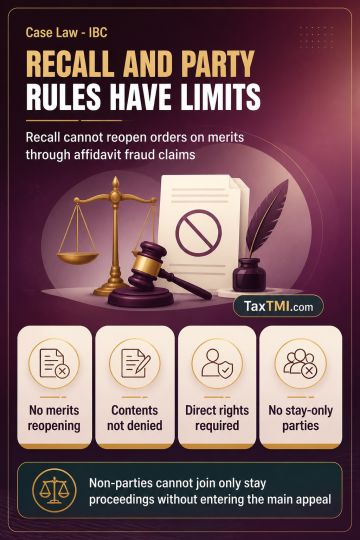
Separate corporate personality prevents directors from being personally liable for company deposits without a guarantee or independent legal undertaki...
Cross-segment derivatives manipulation: integrated order patterns can support interim restraints, while director liability requires responsibility, co...
Power bank definition limits the customs-duty exclusion, preserving concessional treatment for stationary, grid-scale and industrial battery storage s...
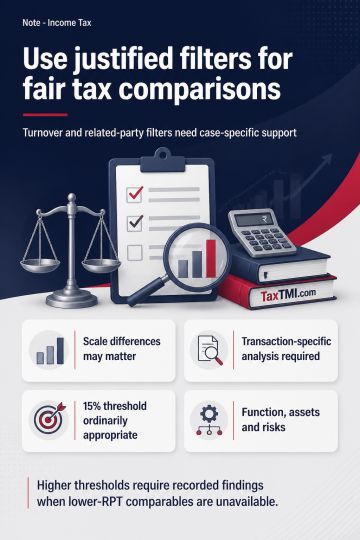
Transfer-pricing comparability under the transactional net margin method requires economically reliable uncontrolled benchmarks under Section 92C and Rule 10B. Turnover is not a standalone statutory bar, but material scale differences may justify excluding enterprises where brand value, intangibles, bargaining power, assets, risks or market conditions could affect margins. A turnover threshold must therefore be supported by transaction-specific comparability analysis rather than applied as a universal rule. Related-party transaction filters seek to reduce the influence of controlled dealings on comparable profitability. A 15% threshold is ordinarily appropriate where sufficient reliable comparables exist; a higher threshold requires a recorded finding that lower-RPT comparables are unavailable. Functional, asset and risk analysis remains essential, and appellate review may address disregard of statutory criteria or perverse findings.
Transfer-pricing comparability under the transactional net margin method requires economically reliable uncontrolled benchmarks under Section 92C and Rule 10B. Turnover is not a standalone statutory bar, but material scale differences may justify excluding enterprises where brand value, intangibles, bargaining power, assets, risks or market conditions could affect margins. A turnover threshold must therefore be supported by transaction-specific comparability analysis rather than applied as a universal rule. Related-party transaction filters seek to reduce the influence of controlled dealings on comparable profitability. A 15% threshold is ordinarily appropriate where sufficient reliable comparables exist; a higher threshold requires a recorded finding that lower-RPT comparables are unavailable. Functional, asset and risk analysis remains essential, and appellate review may address disregard of statutory criteria or perverse findings.
Note: It is a system-generated summary and is for quick reference only.
 TaxTMI
  TaxTMI
 of 4902