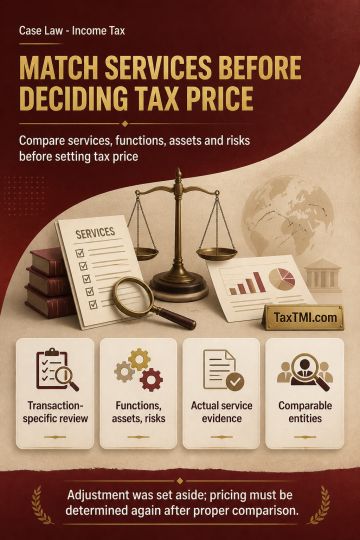
Functional comparability under TNMM requires transaction-specific FAR analysis before benchmarking business-support services provided to associated en...
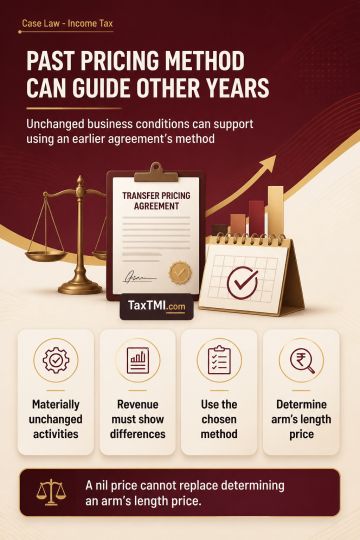
Advance pricing agreement methodology can guide benchmarking for non-covered years when functions, assets, risks and activities remain materially unch...
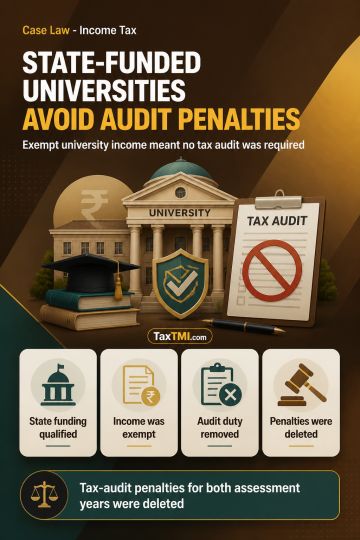
Tax-audit exemption for substantially State-funded educational universities prevents audit-failure penalties where income qualifies for statutory exem...
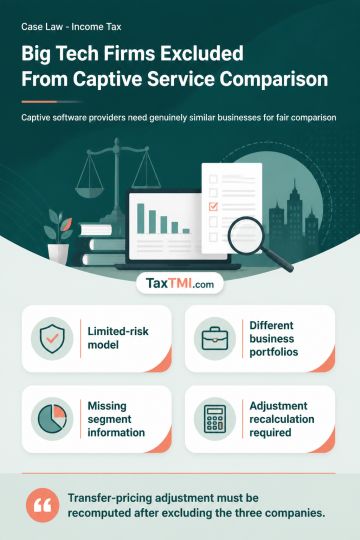
Functional, asset and risk analysis excludes diversified technology companies from captive software development comparables under cost-plus arrangemen...
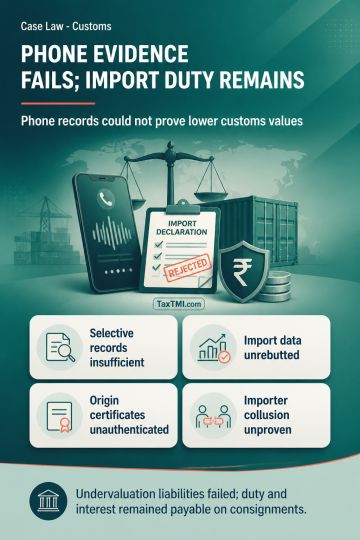
Mobile-phone electronic evidence failed to establish customs undervaluation, while duty survived on non-authentic origin certificates without importer...
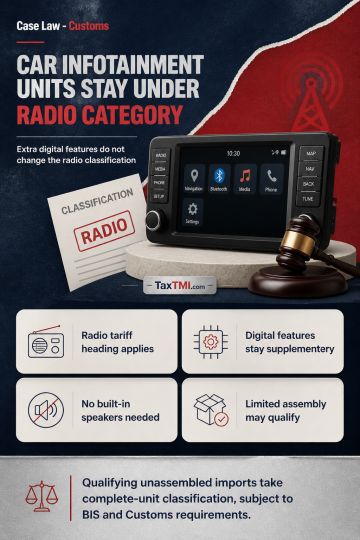
Automotive radio classification treats integrated infotainment features as supplementary, placing complete and qualifying unassembled units under the ...
Separate corporate personality prevents directors from being personally liable for company deposits without a guarantee or independent legal undertaki...
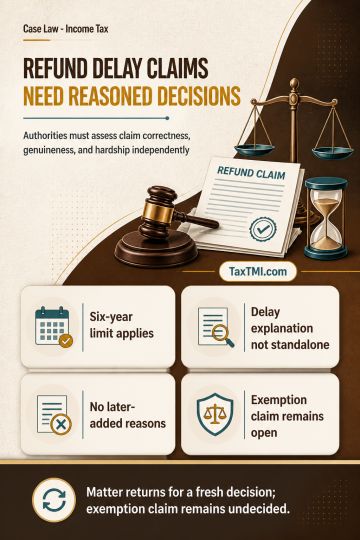
Section 119(2)(b) permits condonation of delay in a revised return seeking refund to prevent genuine hardship, subject to the prescribed six-year limit. The competent authority must independently determine whether the refund claim is correct and genuine and whether genuine hardship exists; this power cannot be exercised routinely. A rejection cannot rest on irrelevant considerations or an unreasoned denial of hardship, and recorded reasons cannot be supplemented in court. The sufficient-cause standard for delayed appeals under the Limitation Act does not impose a stand-alone requirement to explain delay under section 119(2)(b). The refusal to condone was quashed and remitted for a fresh reasoned decision, leaving the exemption claim open.
Section 119(2)(b) permits condonation of delay in a revised return seeking refund to prevent genuine hardship, subject to the prescribed six-year limit. The competent authority must independently determine whether the refund claim is correct and genuine and whether genuine hardship exists; this power cannot be exercised routinely. A rejection cannot rest on irrelevant considerations or an unreasoned denial of hardship, and recorded reasons cannot be supplemented in court. The sufficient-cause standard for delayed appeals under the Limitation Act does not impose a stand-alone requirement to explain delay under section 119(2)(b). The refusal to condone was quashed and remitted for a fresh reasoned decision, leaving the exemption claim open.
Note: It is a system-generated summary and is for quick reference only.
 TaxTMI
 TaxTMI

 of 4916