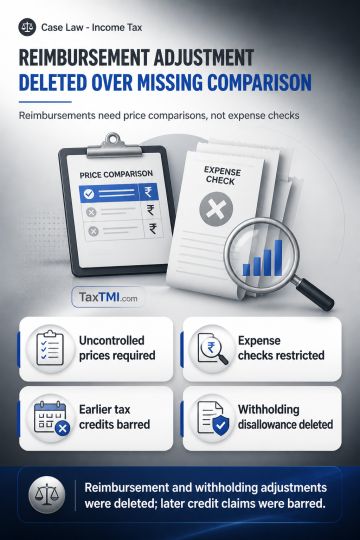
Transfer-pricing reimbursement adjustments require uncontrolled comparables and cannot become expense-genuineness reviews, resulting in deletion of th...
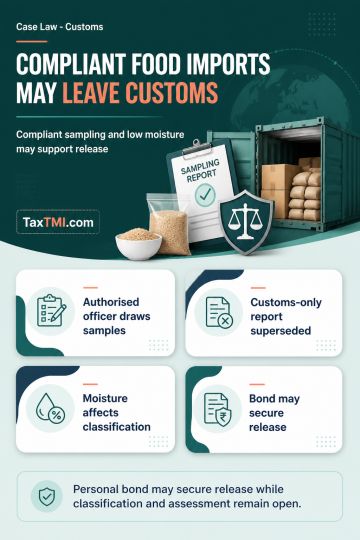
Food import sampling requirements support provisional release where unseized consignments conform to standards and raw areca classification is unestab...
Diagnostic microcuvette classification follows sole-use analytical function, placing specialised disposable cuvettes with their analyser rather than g...
Customs Broker licensing proceedings fail when their offence-report foundation collapses and authorisation, advisory, and KYC duties remain unbreached...
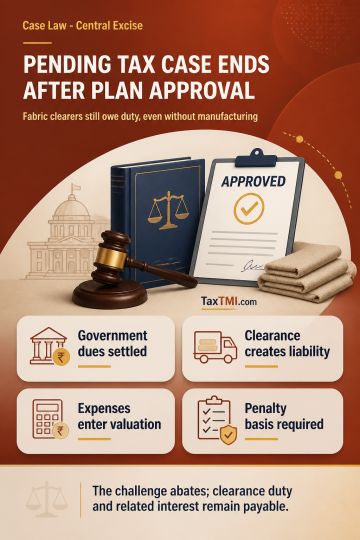
Approval of a resolution plan settling confirmed government dues causes the corporate debtor's pending excise appeal to abate. Excise duty remains payable by persons who clear processed fabrics, even where they are not manufacturers, because liability attaches on clearance; however, the transferee's specific penalty concerning stock was not sustained. Pre-clearance grading, cartage, brokerage and stock-interest expenses form part of assessable value where goods enter wholesale trade only on sale to independent buyers, sustaining the related duty and interest. Penalty for intent to evade duty requires findings of prescribed conduct and cannot rest solely on inadmissible valuation deductions. Penalties relating to confiscable goods likewise require their statutory basis; general penalties may instead apply to proven participation in duty evasion.
Approval of a resolution plan settling confirmed government dues causes the corporate debtor's pending excise appeal to abate. Excise duty remains payable by persons who clear processed fabrics, even where they are not manufacturers, because liability attaches on clearance; however, the transferee's specific penalty concerning stock was not sustained. Pre-clearance grading, cartage, brokerage and stock-interest expenses form part of assessable value where goods enter wholesale trade only on sale to independent buyers, sustaining the related duty and interest. Penalty for intent to evade duty requires findings of prescribed conduct and cannot rest solely on inadmissible valuation deductions. Penalties relating to confiscable goods likewise require their statutory basis; general penalties may instead apply to proven participation in duty evasion.
Note: It is a system-generated summary and is for quick reference only.
 TaxTMI
  TaxTMI
 of 4912