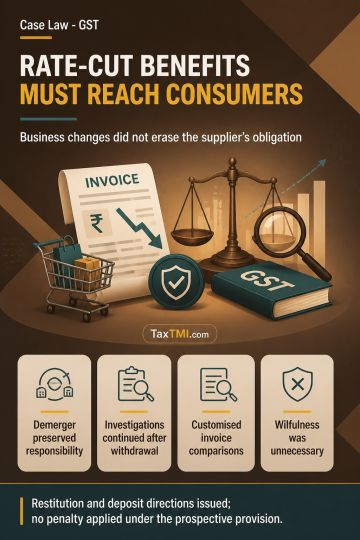
Anti-profiteering obligations survive business demerger, complaint withdrawal, and customized supply arrangements where rate-reduction benefits are no...
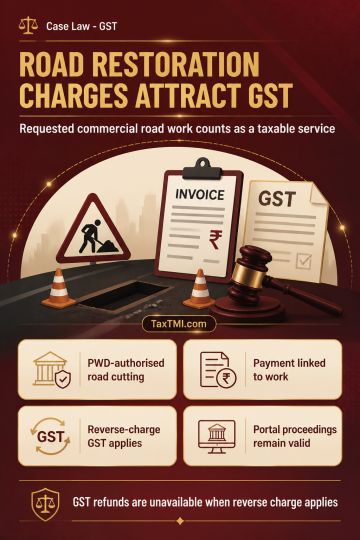
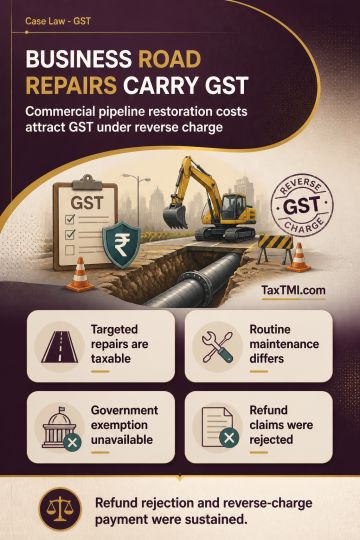
Road restoration charges constitute taxable services when requested for commercial pipeline activity, requiring reverse-charge GST from the business r...
Interest on delayed release of requisitioned cash includes statutory pre-assessment interest and restitutionary compensation for unlawful post-assessm...
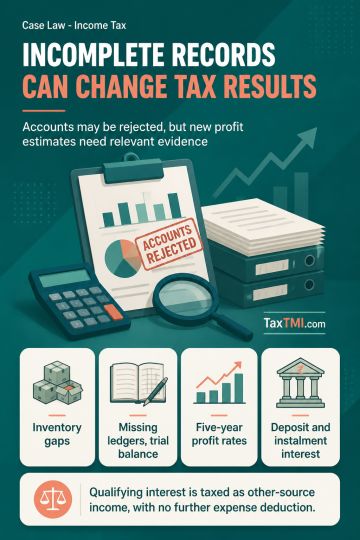
Incomplete inventory records justify rejecting accounts, while profit estimation requires relevant comparable material and interest falls under other ...
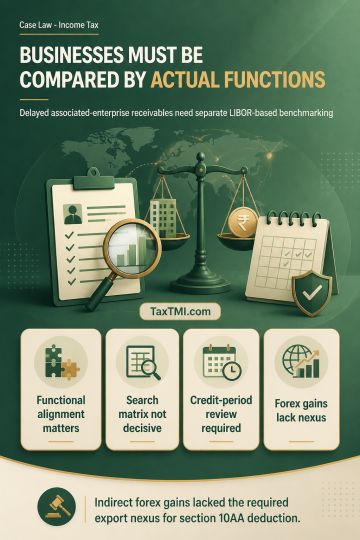
Transfer-pricing comparability requires functional alignment; delayed associated-enterprise receivables need separate LIBOR-based benchmarking, while ...
Page of 4915
Press 'Enter' after typing page number.
121 to 140 of 98300 Results
❮
❯
❯❯
0 / 200
Expand Note
Add to Folder
No Folders have been created
+
Are you sure you want to delete "My most important" ?
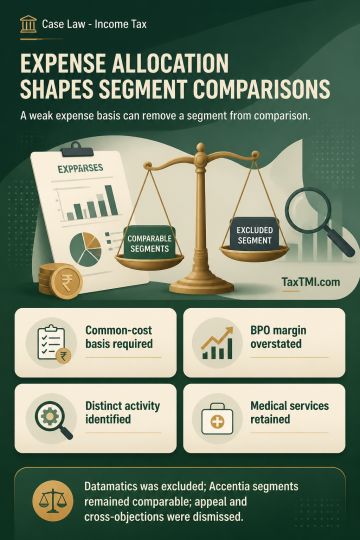
TNMM segmental comparability requires a reliable allocation of common operating expenses when OP/OC is used as the profit-level indicator. Information obtained from a proposed comparable does not itself establish the reliability of its segmental data. Because material entity-level expenses were not allocated to Datamatics Financial Services Ltd.'s BPO segment and no verifiable allocation basis was shown, its margin overstated profitability and the segment was excluded as an uncontrolled benchmark. Conversely, separately reported medical transcription, billing, coding and related IT-enabled service segments of Accentia Technologies Ltd. remained comparable: its distinct software development activity was identified and excluded, and no functional dissimilarity in the retained segments was established. Revenue's appeal and the assessee's cross-objections were dismissed.
TNMM segmental comparability requires a reliable allocation of common operating expenses when OP/OC is used as the profit-level indicator. Information obtained from a proposed comparable does not itself establish the reliability of its segmental data. Because material entity-level expenses were not allocated to Datamatics Financial Services Ltd.'s BPO segment and no verifiable allocation basis was shown, its margin overstated profitability and the segment was excluded as an uncontrolled benchmark. Conversely, separately reported medical transcription, billing, coding and related IT-enabled service segments of Accentia Technologies Ltd. remained comparable: its distinct software development activity was identified and excluded, and no functional dissimilarity in the retained segments was established. Revenue's appeal and the assessee's cross-objections were dismissed.
Note: It is a system-generated summary and is for quick reference only.
 TaxTMI
 TaxTMI

 of 4915