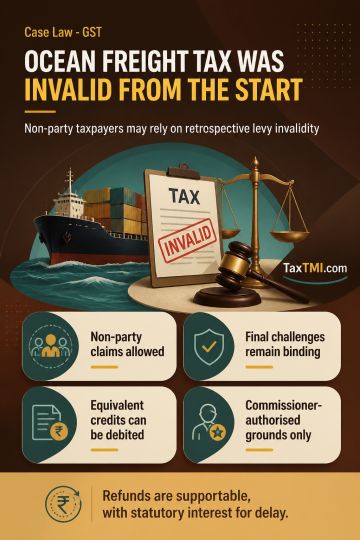
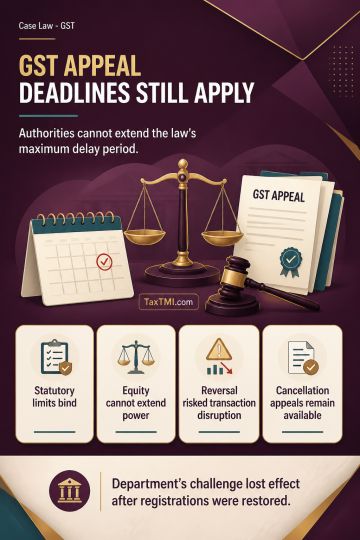
Retrospective invalidity of ocean-freight IGST supports refunds despite non-party status and prior credit utilisation, subject to authorised appeal gr...
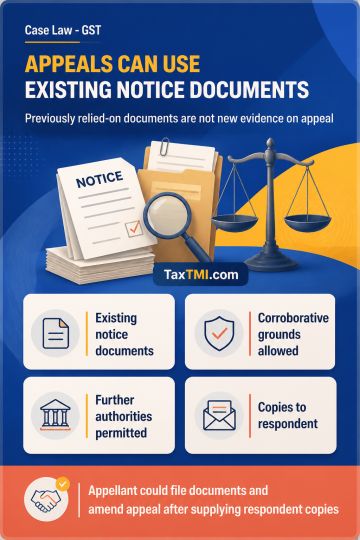
Additional evidence in departmental appeals may include show-cause-notice material without introducing a new case where it merely corroborates existin...
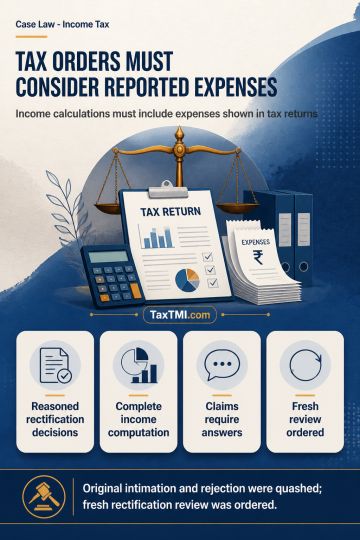
Reasoned rectification orders require consideration of expenditure disclosed in income-tax returns, preventing revision based on incomplete income com...
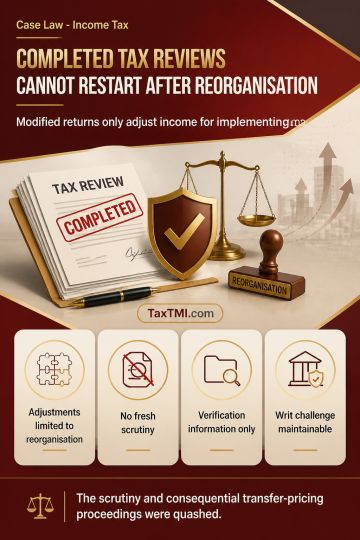
Modified returns after business reorganisations cannot trigger fresh scrutiny once the original assessment was complete, invalidating related transfer...
Third-party loose sheets require reliable nexus before supporting unexplained expenditure additions; presumptions do not establish payer identity or o...
TNMM comparability using audited accounts and working-capital adjustments can eliminate unwarranted transfer-pricing additions where verified margins ...
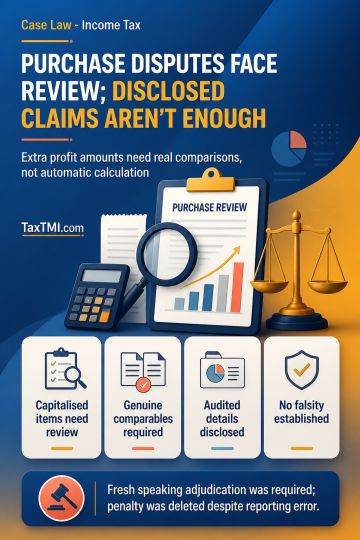
Gross-profit additions on disputed purchases require reasoned appellate determination; disclosed claims alone do not support inaccurate-particulars pe...
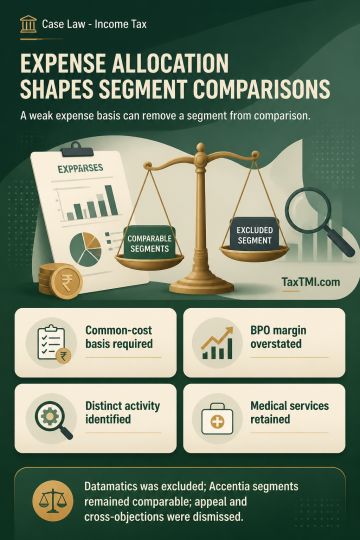
TNMM segmental comparability requires a reliable allocation of common operating expenses when OP/OC is used as the profit-level indicator. Information obtained from a proposed comparable does not itself establish the reliability of its segmental data. Because material entity-level expenses were not allocated to Datamatics Financial Services Ltd.'s BPO segment and no verifiable allocation basis was shown, its margin overstated profitability and the segment was excluded as an uncontrolled benchmark. Conversely, separately reported medical transcription, billing, coding and related IT-enabled service segments of Accentia Technologies Ltd. remained comparable: its distinct software development activity was identified and excluded, and no functional dissimilarity in the retained segments was established. Revenue's appeal and the assessee's cross-objections were dismissed.
TNMM segmental comparability requires a reliable allocation of common operating expenses when OP/OC is used as the profit-level indicator. Information obtained from a proposed comparable does not itself establish the reliability of its segmental data. Because material entity-level expenses were not allocated to Datamatics Financial Services Ltd.'s BPO segment and no verifiable allocation basis was shown, its margin overstated profitability and the segment was excluded as an uncontrolled benchmark. Conversely, separately reported medical transcription, billing, coding and related IT-enabled service segments of Accentia Technologies Ltd. remained comparable: its distinct software development activity was identified and excluded, and no functional dissimilarity in the retained segments was established. Revenue's appeal and the assessee's cross-objections were dismissed.
Note: It is a system-generated summary and is for quick reference only.
 TaxTMI
 TaxTMI

 of 4921