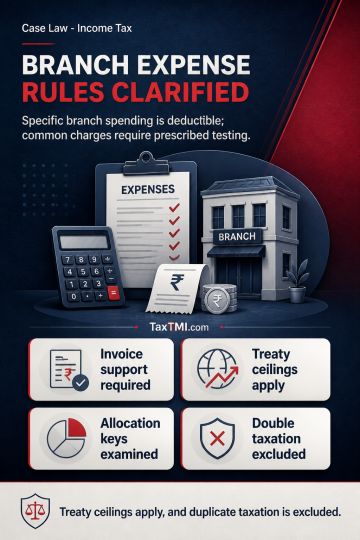
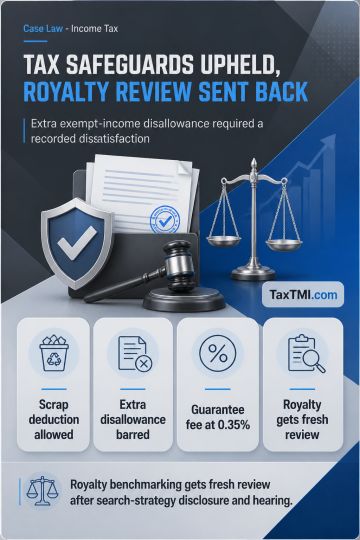
Head Office cost allocation requires prescribed transfer-pricing methods; treaty ceilings bar surcharge and cess, while duplicate taxation is excluded...
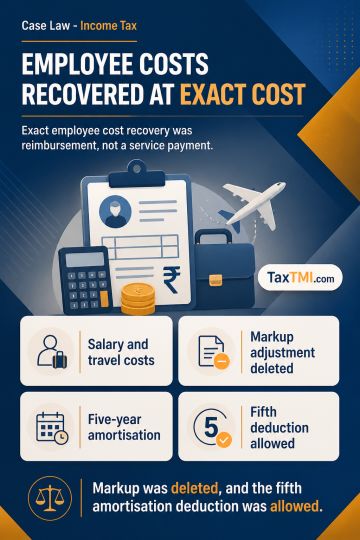
Cost-to-cost reimbursement of seconded employees is not service consideration; transfer-pricing markup was deleted and amalgamation amortisation allow...
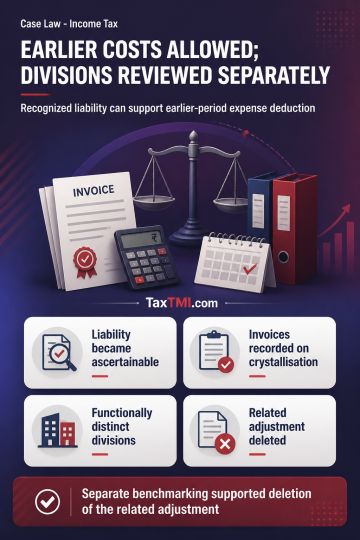
Crystallisation of liability supports prior-period expense deduction, while functionally distinct divisions require separate transfer-pricing benchmar...
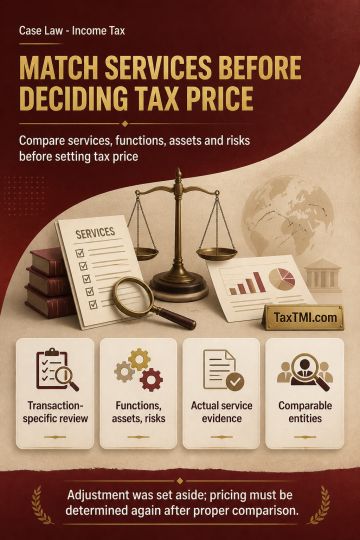
Functional comparability under TNMM requires transaction-specific FAR analysis before benchmarking business-support services provided to associated en...
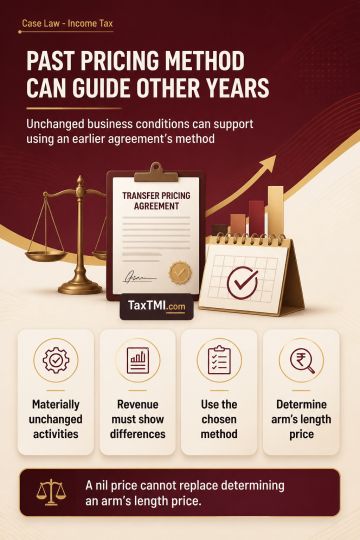
Advance pricing agreement methodology can guide benchmarking for non-covered years when functions, assets, risks and activities remain materially unch...
Page of 4918
Press 'Enter' after typing page number.
341 to 360 of 98359 Results
❮
❯
❯❯
0 / 200
Expand Note
Add to Folder
No Folders have been created
+
Are you sure you want to delete "My most important" ?
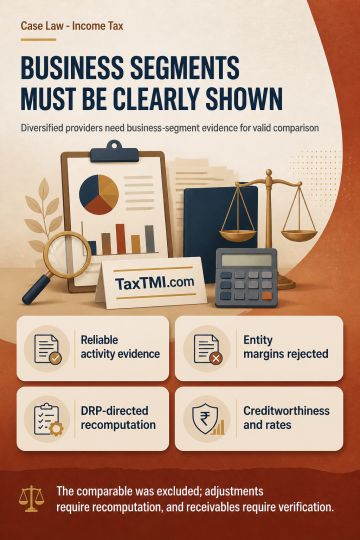
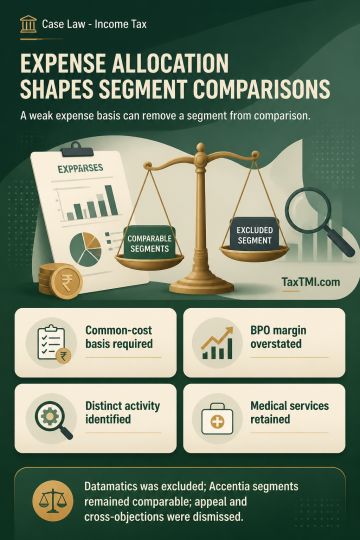
TNMM segmental comparability requires a reliable allocation of common operating expenses when OP/OC is used as the profit-level indicator. Information obtained from a proposed comparable does not itself establish the reliability of its segmental data. Because material entity-level expenses were not allocated to Datamatics Financial Services Ltd.'s BPO segment and no verifiable allocation basis was shown, its margin overstated profitability and the segment was excluded as an uncontrolled benchmark. Conversely, separately reported medical transcription, billing, coding and related IT-enabled service segments of Accentia Technologies Ltd. remained comparable: its distinct software development activity was identified and excluded, and no functional dissimilarity in the retained segments was established. Revenue's appeal and the assessee's cross-objections were dismissed.
TNMM segmental comparability requires a reliable allocation of common operating expenses when OP/OC is used as the profit-level indicator. Information obtained from a proposed comparable does not itself establish the reliability of its segmental data. Because material entity-level expenses were not allocated to Datamatics Financial Services Ltd.'s BPO segment and no verifiable allocation basis was shown, its margin overstated profitability and the segment was excluded as an uncontrolled benchmark. Conversely, separately reported medical transcription, billing, coding and related IT-enabled service segments of Accentia Technologies Ltd. remained comparable: its distinct software development activity was identified and excluded, and no functional dissimilarity in the retained segments was established. Revenue's appeal and the assessee's cross-objections were dismissed.
Note: It is a system-generated summary and is for quick reference only.
 TaxTMI
 TaxTMI

 of 4918