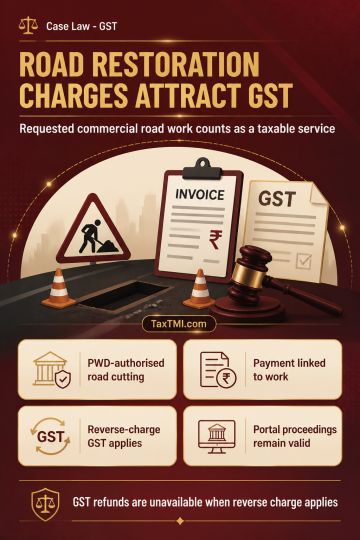
Road restoration charges constitute taxable services when requested for commercial pipeline activity, requiring reverse-charge GST from the business r...
Interest on delayed release of requisitioned cash includes statutory pre-assessment interest and restitutionary compensation for unlawful post-assessm...
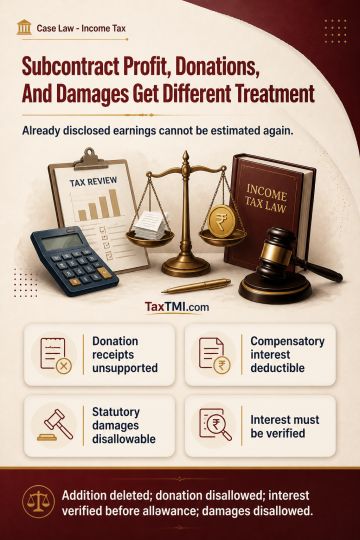
Incomplete inventory records justify rejecting accounts, while profit estimation requires relevant comparable material and interest falls under other ...
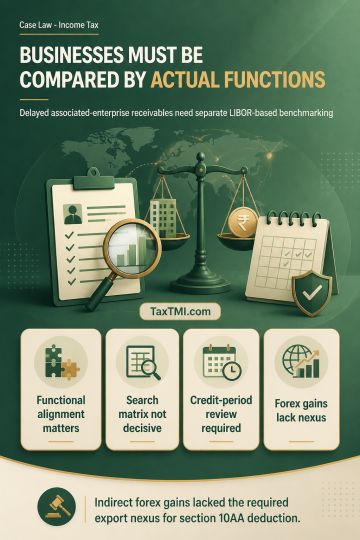
Transfer-pricing comparability requires functional alignment; delayed associated-enterprise receivables need separate LIBOR-based benchmarking, while ...
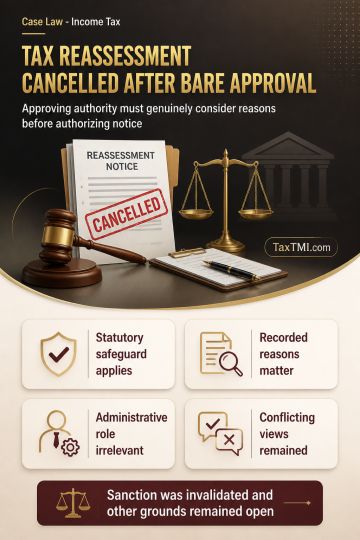
Extended reassessment limitation in search cases requires asset-linked escaped income, invalidating additions based only on unexplained money or expen...
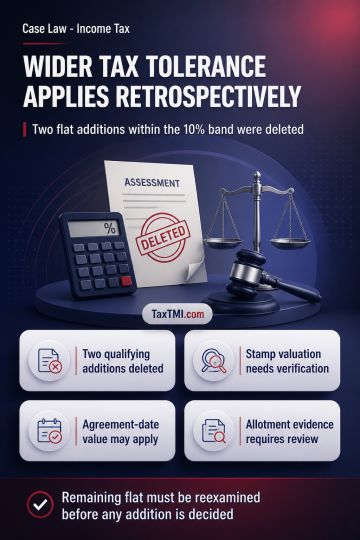
Enhanced tolerance band under section 43CA applies retrospectively, deleting qualifying deemed-sale additions while disputed stamp valuation requires ...
Departmental exoneration does not by itself require discharge, acquittal, or termination of a criminal prosecution because departmental and criminal proceedings are independent, proceed on different evidence, and apply different standards of proof. The High Court therefore upheld refusal to discharge Customs officials accused of facilitating gold smuggling. At the discharge stage, the court must determine whether the prosecution material discloses the alleged offences or creates a strong suspicion warranting trial; mere suspicion is insufficient. As the material prima facie met that threshold, evidentiary evaluation, including alleged illegal gratification, was left for trial. The revision petitions were dismissed and trial was to proceed expeditiously.
Departmental exoneration does not by itself require discharge, acquittal, or termination of a criminal prosecution because departmental and criminal proceedings are independent, proceed on different evidence, and apply different standards of proof. The High Court therefore upheld refusal to discharge Customs officials accused of facilitating gold smuggling. At the discharge stage, the court must determine whether the prosecution material discloses the alleged offences or creates a strong suspicion warranting trial; mere suspicion is insufficient. As the material prima facie met that threshold, evidentiary evaluation, including alleged illegal gratification, was left for trial. The revision petitions were dismissed and trial was to proceed expeditiously.
Note: It is a system-generated summary and is for quick reference only.
 TaxTMI
 TaxTMI

 of 4920