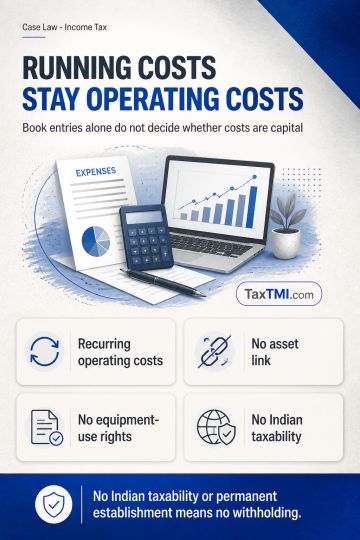
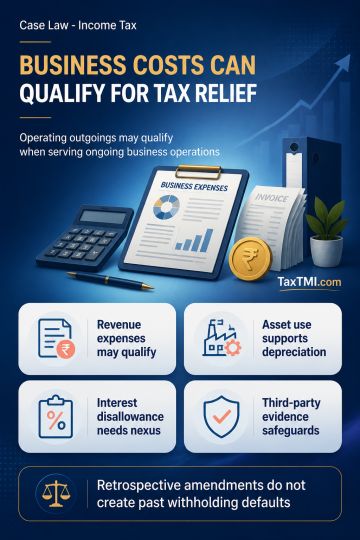
Business expenditure and depreciation rules allow operational outgoings while limiting disallowances for personal elements and unsupported third-party...
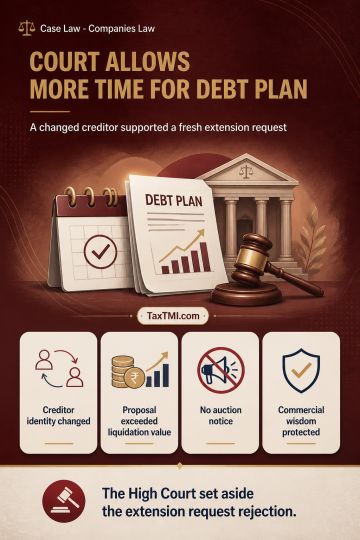
Compromise-and-arrangement extensions may accommodate debt assignment where creditor commercial judgment supports value maximisation and avoids proced...
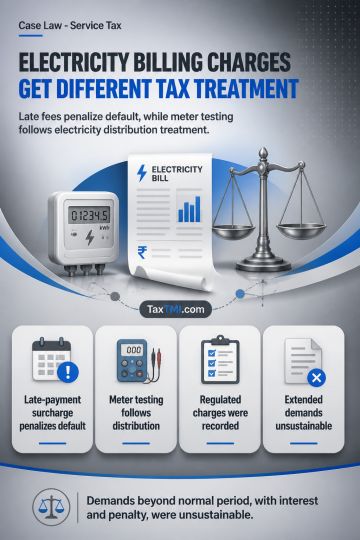
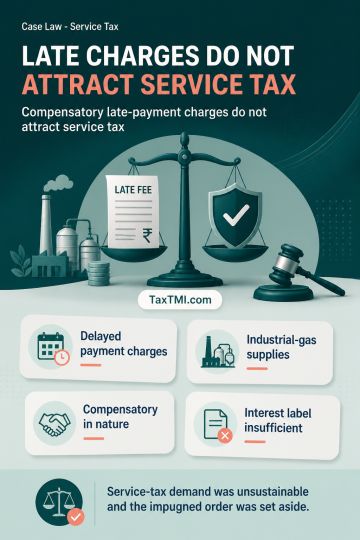
Delayed-payment surcharge is not taxable tolerance consideration where it penalises default, while meter testing follows electricity distribution trea...
Sufficient cause for delayed revenue income-tax appeals requires bona fides, due diligence and a credible explanation; otherwise limitation bars appea...
Valid e-way bill compliance requires Part B to identify the vehicle actually transporting goods. Where a vehicle breaks down and goods are transferred, the movement must be supported by contemporaneous evidence and the e-way bill must be updated or freshly generated before transit. A later e-way bill issued by the purchaser does not cure a vehicle mismatch where the driver holds the supplier's invoice and no contemporaneous material establishes purchaser-led transport. Such discrepancies are not merely technical and can support an inference of intent to evade tax. Penalty proceedings under Section 129 for transport without a valid e-way bill were confirmed.
Valid e-way bill compliance requires Part B to identify the vehicle actually transporting goods. Where a vehicle breaks down and goods are transferred, the movement must be supported by contemporaneous evidence and the e-way bill must be updated or freshly generated before transit. A later e-way bill issued by the purchaser does not cure a vehicle mismatch where the driver holds the supplier's invoice and no contemporaneous material establishes purchaser-led transport. Such discrepancies are not merely technical and can support an inference of intent to evade tax. Penalty proceedings under Section 129 for transport without a valid e-way bill were confirmed.
Note: It is a system-generated summary and is for quick reference only.
 TaxTMI
 TaxTMI

 of 4916