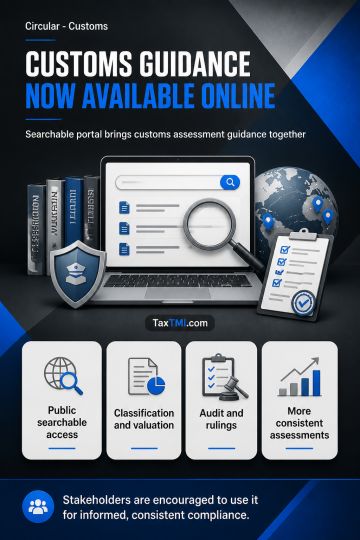
Customs Assessment Portal centralises classification and valuation guidance to support consistent, transparent and informed compliance across stakehol...
GST refunds for cancelled air tickets remain available when passenger reimbursements defeat unjust enrichment and credit-note adjustment is unavailabl...
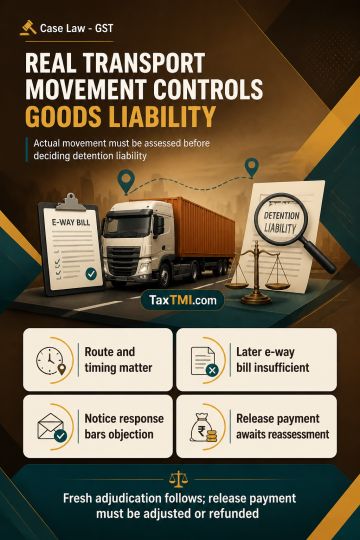
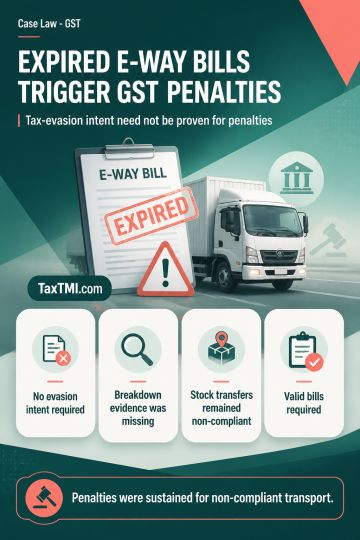
Valid e-way bill compliance requires Part B to identify the vehicle actually transporting goods. Where a vehicle breaks down and goods are transferred, the movement must be supported by contemporaneous evidence and the e-way bill must be updated or freshly generated before transit. A later e-way bill issued by the purchaser does not cure a vehicle mismatch where the driver holds the supplier's invoice and no contemporaneous material establishes purchaser-led transport. Such discrepancies are not merely technical and can support an inference of intent to evade tax. Penalty proceedings under Section 129 for transport without a valid e-way bill were confirmed.
Valid e-way bill compliance requires Part B to identify the vehicle actually transporting goods. Where a vehicle breaks down and goods are transferred, the movement must be supported by contemporaneous evidence and the e-way bill must be updated or freshly generated before transit. A later e-way bill issued by the purchaser does not cure a vehicle mismatch where the driver holds the supplier's invoice and no contemporaneous material establishes purchaser-led transport. Such discrepancies are not merely technical and can support an inference of intent to evade tax. Penalty proceedings under Section 129 for transport without a valid e-way bill were confirmed.
Note: It is a system-generated summary and is for quick reference only.
 TaxTMI
 TaxTMI

 of 4915