Electronic certificates of origin enable preferential tariffs under the India-New Zealand FTA when format, verification, and filing requirements are m...
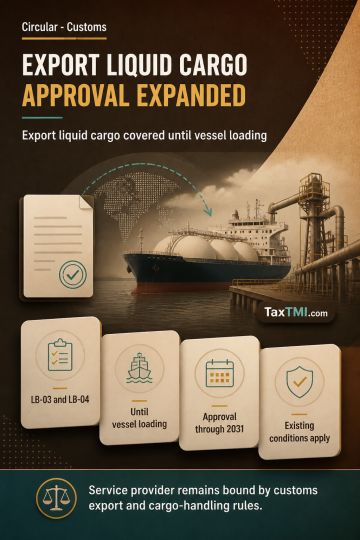
Customs approval for liquid cargo exports extends designated jetty operations while existing boarding station and customs area limits remain unchanged...
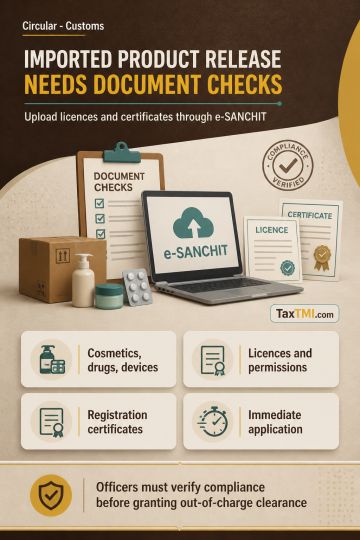
Mandatory compliance document verification now conditions out-of-charge clearance for imported cosmetics, drugs, and medical devices through PGA-facil...
Double taxation of turnover requires holistic verification across separately registered units and permits limited rectification of overlapping assessm...
Valid e-way bill compliance requires Part B to identify the vehicle actually transporting goods. Where a vehicle breaks down and goods are transferred, the movement must be supported by contemporaneous evidence and the e-way bill must be updated or freshly generated before transit. A later e-way bill issued by the purchaser does not cure a vehicle mismatch where the driver holds the supplier's invoice and no contemporaneous material establishes purchaser-led transport. Such discrepancies are not merely technical and can support an inference of intent to evade tax. Penalty proceedings under Section 129 for transport without a valid e-way bill were confirmed.
Valid e-way bill compliance requires Part B to identify the vehicle actually transporting goods. Where a vehicle breaks down and goods are transferred, the movement must be supported by contemporaneous evidence and the e-way bill must be updated or freshly generated before transit. A later e-way bill issued by the purchaser does not cure a vehicle mismatch where the driver holds the supplier's invoice and no contemporaneous material establishes purchaser-led transport. Such discrepancies are not merely technical and can support an inference of intent to evade tax. Penalty proceedings under Section 129 for transport without a valid e-way bill were confirmed.
Note: It is a system-generated summary and is for quick reference only.
 TaxTMI
 TaxTMI