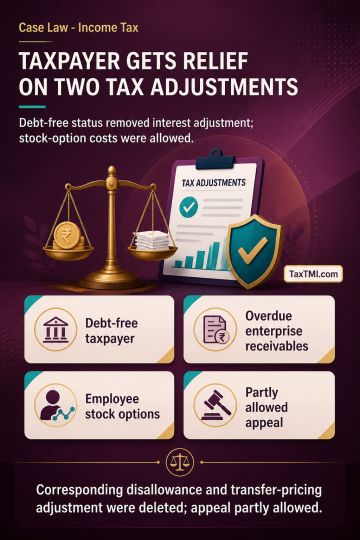
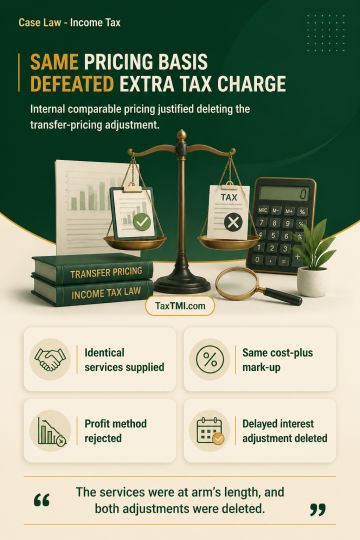
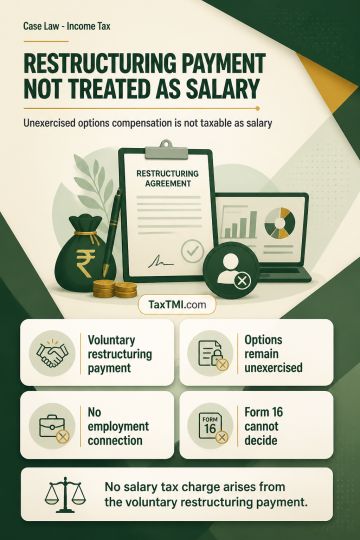
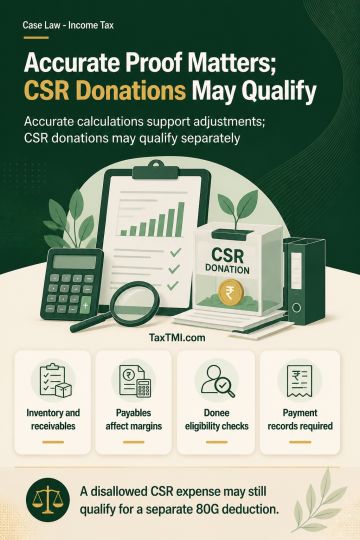
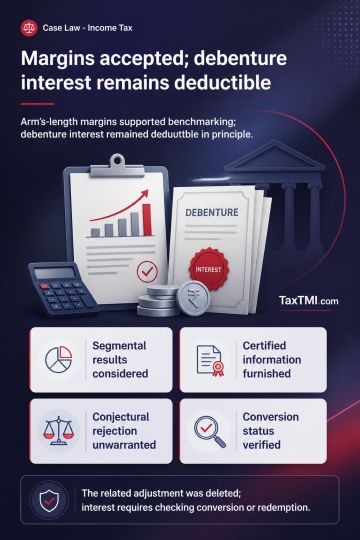
Overdue associated-enterprise receivables: debt-free status defeated notional-interest adjustment, while employee stock-option costs qualified as busi...
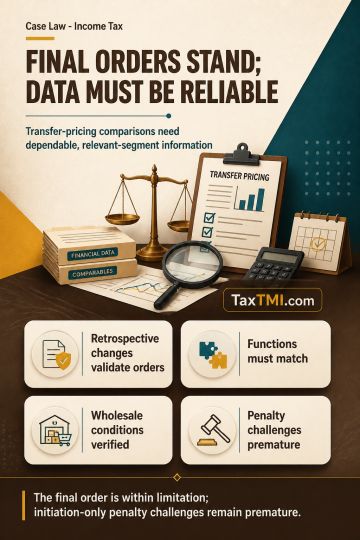
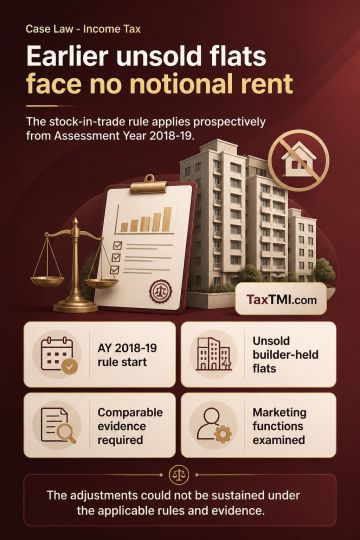
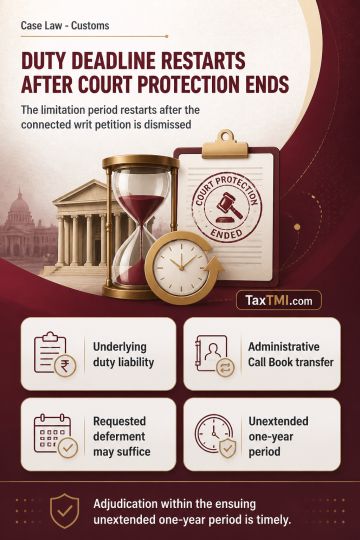
Retrospective assessment-limitation amendments validate final orders while contemporaneous segment data governs transfer-pricing comparability and tol...
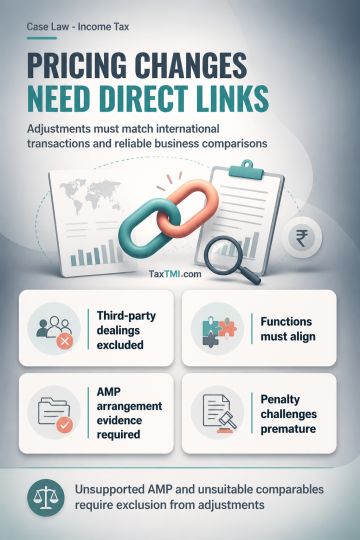
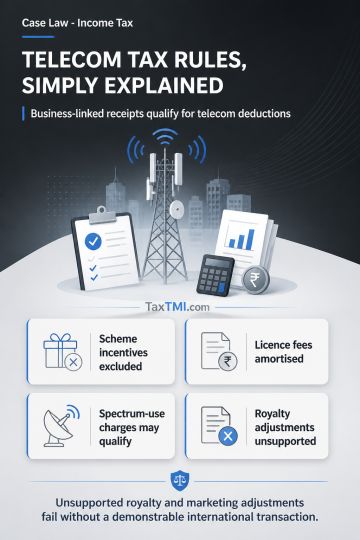
Transfer pricing adjustments must track international transactions, while unsupported AMP adjustments and unsuitable manufacturing comparables require...
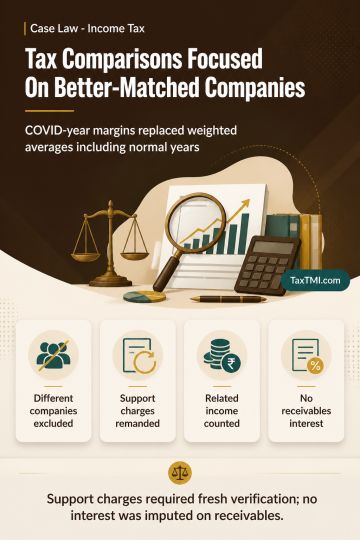
Transfer-pricing adjustments must reflect functional comparability, working-capital effects, and avoid duplicating interest on associated-enterprise r...
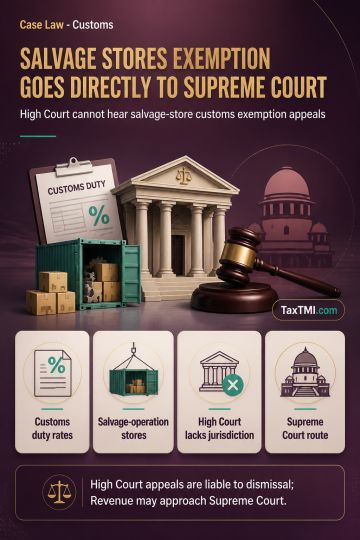
Restricted gold import conditions: breach permits absolute confiscation, while redemption remains discretionary and is rarely disturbed on writ review...
Page of 4931
Press 'Enter' after typing page number.
1941 to 1960 of 98613 Results
❮
❯
❯❯
0 / 200
Expand Note
Add to Folder
No Folders have been created
+
Are you sure you want to delete "My most important" ?
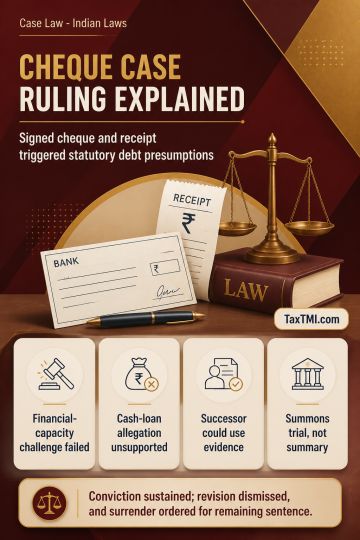
Admission of cheque execution and signatures on the cheque and money receipt triggered the presumptions of consideration and legally enforceable debt under the Negotiable Instruments Act. Questions concerning the complainant's financial capacity and an alleged breach of income-tax rules on cash loans did not rebut those presumptions without cogent and reliable evidence. The cheque-dishonour conviction was therefore sustained. A succeeding Magistrate could decide the matter on evidence recorded by the predecessor because the prosecution proceeded as a summons trial, not a summary trial; the statutory restriction on successor Magistrates was consequently inapplicable. The criminal revision was dismissed, and surrender was directed for the remaining sentence.
Admission of cheque execution and signatures on the cheque and money receipt triggered the presumptions of consideration and legally enforceable debt under the Negotiable Instruments Act. Questions concerning the complainant's financial capacity and an alleged breach of income-tax rules on cash loans did not rebut those presumptions without cogent and reliable evidence. The cheque-dishonour conviction was therefore sustained. A succeeding Magistrate could decide the matter on evidence recorded by the predecessor because the prosecution proceeded as a summons trial, not a summary trial; the statutory restriction on successor Magistrates was consequently inapplicable. The criminal revision was dismissed, and surrender was directed for the remaining sentence.
Note: It is a system-generated summary and is for quick reference only.
 TaxTMI
 TaxTMI

 of 4931