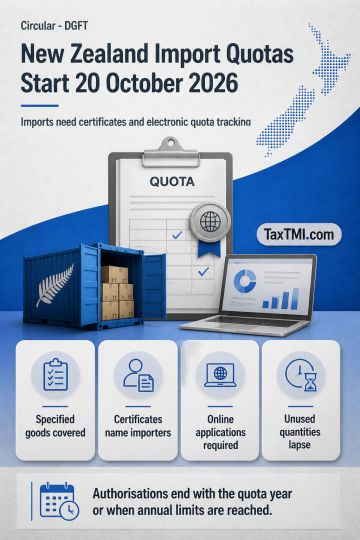
Tariff rate quota authorisations govern preferential imports of specified New Zealand goods through export certification and electronic customs debiti...
Electronic Continuity Bond Registration replaces manual container permissions, with quarterly reporting and re-export monitoring for duty-free contain...
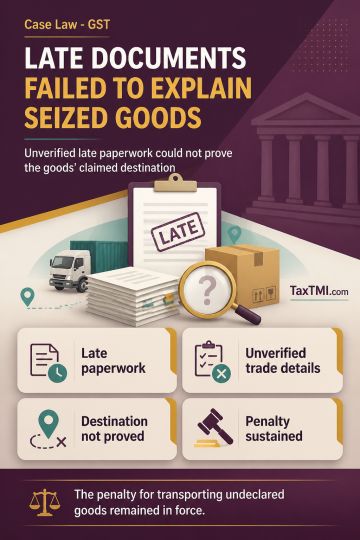
Delayed transport documents failed to validate intercepted goods, sustaining transit-state penalties where the claimed interstate destination remained...
Customs-controlled movement of domestic/customs-cleared and EXIM...
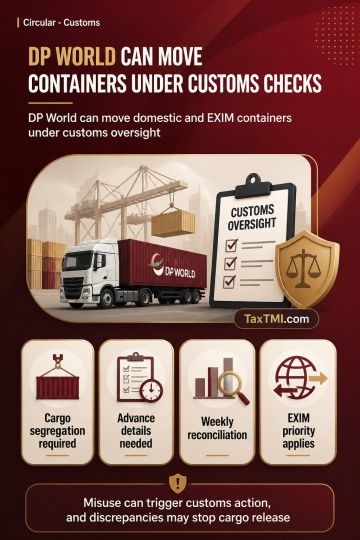
Customs-controlled container movement now extends to DP World facilities, subject to segregation, inspections, reconciliation, and EXIM cargo priority.
Contents
Summary
Note
Bookmark
Share
✓ Copied successfully !
Print
Print Options
For full text, please login
Login to TaxTMI
Verification Pending
The Email Id has not been verified. Click on the link we have sent on
Customs-controlled movement of domestic/customs-cleared and EXIM containers between port terminals and designated ICDs/CFSs is extended to Container Rail Road Services Pvt. Ltd. (DP World Group), alongside CONCOR. The operator must segregate and account for domestic and EXIM cargo, give advance container details, verify container numbers and seals, maintain weekly reconciliation, and ensure at least 50% of outbound cargo is EXIM cargo. Seal or container discrepancies and suspected tampering require immediate reporting; cargo cannot be processed or released without the proper officer's permission and may undergo 100% examination. Reworking, repacking, or restuffing requires permission. Customs may conduct random checks, while custodians and CCSPs remain accountable, supported by an indemnity bond; misuse attracts action under applicable customs laws.
Customs-controlled movement of domestic/customs-cleared and EXIM containers between port terminals and designated ICDs/CFSs is extended to Container Rail Road Services Pvt. Ltd. (DP World Group), alongside CONCOR. The operator must segregate and account for domestic and EXIM cargo, give advance container details, verify container numbers and seals, maintain weekly reconciliation, and ensure at least 50% of outbound cargo is EXIM cargo. Seal or container discrepancies and suspected tampering require immediate reporting; cargo cannot be processed or released without the proper officer's permission and may undergo 100% examination. Reworking, repacking, or restuffing requires permission. Customs may conduct random checks, while custodians and CCSPs remain accountable, supported by an indemnity bond; misuse attracts action under applicable customs laws.
Note: It is a system-generated summary and is for quick reference only.
 TaxTMI
 TaxTMI