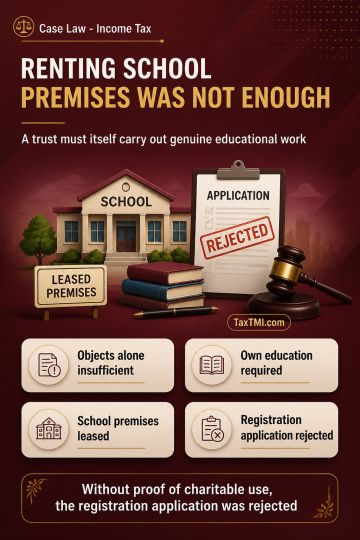
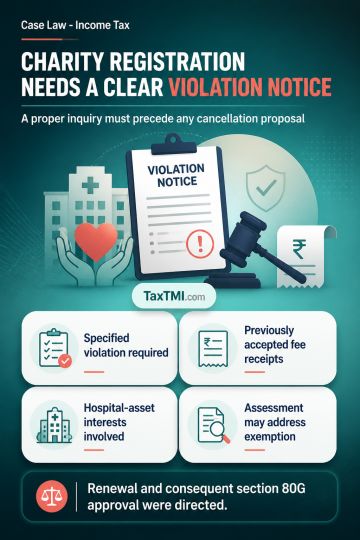
Charitable trust registration requires a specified-violation notice; settled cash deposits and related-party payments did not justify cancellation or ...
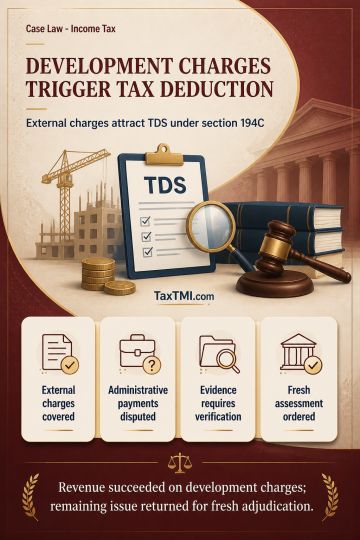
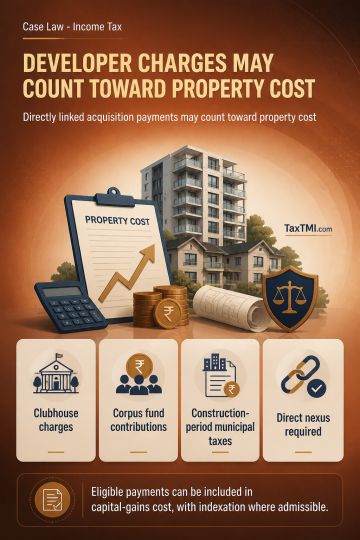
External development charges trigger TDS under section 194C, while disputed administrative payments require factual verification and fresh adjudicatio...
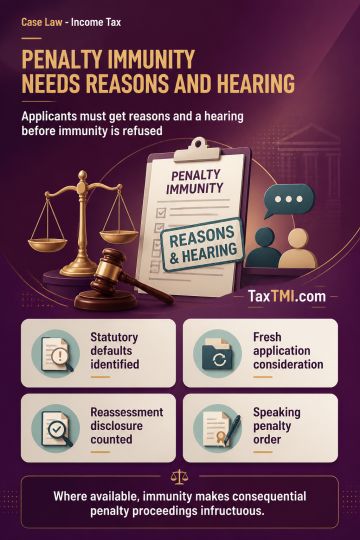
Section 270AA penalty immunity requires identified statutory defaults and a hearing before rejection; reassessment disclosure may constitute under-rep...
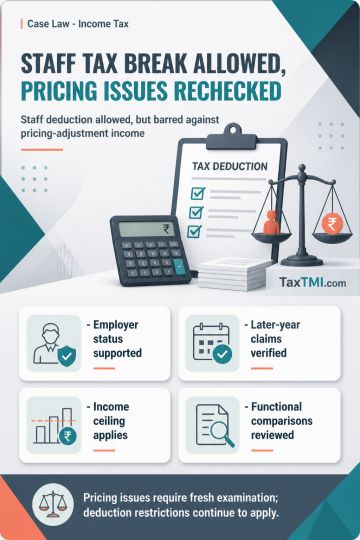
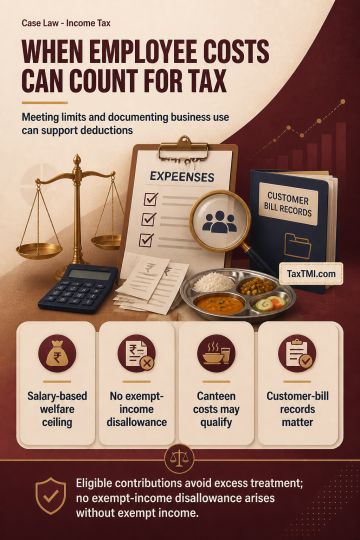
Section 80JJAA employee-cost deduction allowed for deployed staff but barred against transfer-pricing income enhancement, with pricing issues remanded...
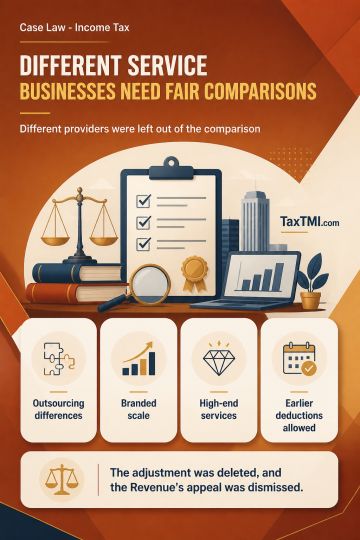
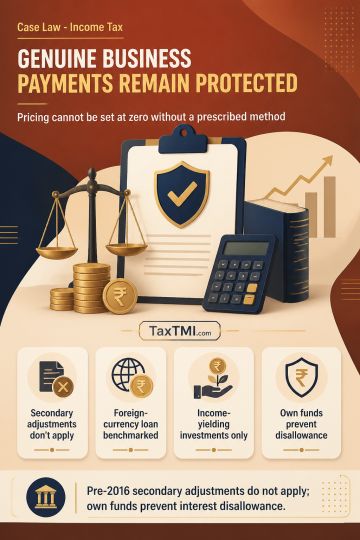
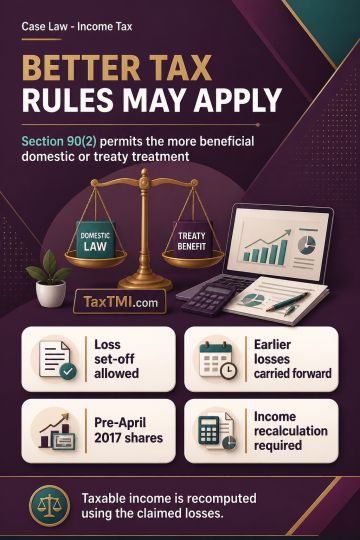
Transfer-pricing methodology protects commercially genuine associated-enterprise payments, while pre-2016 secondary adjustments and related notional i...
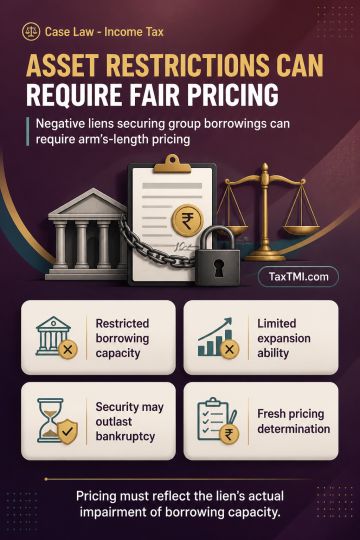
Negative liens over operating assets can constitute international transactions requiring arm's-length pricing reflecting restricted borrowing and expa...
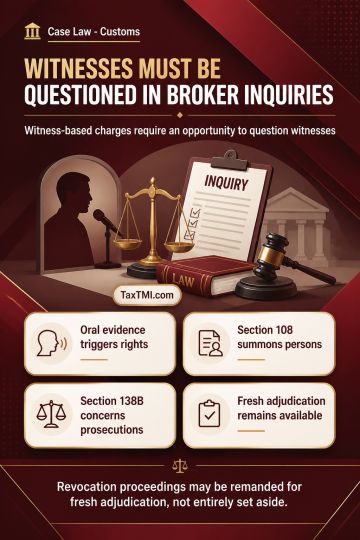
Cross-examination rights in Customs Broker revocation inquiries require witness examination; procedural denial may be cured through fresh adjudication...
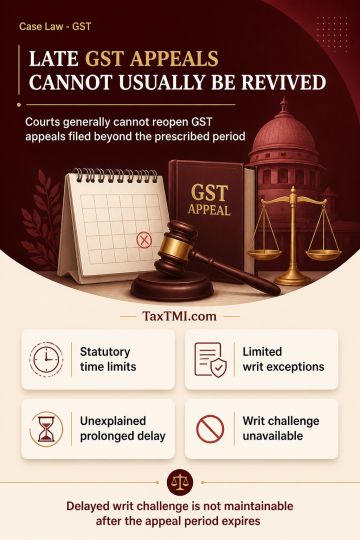
Statutory appellate limitation under the BGST Act forms part of the legislative scheme for prompt GST dispute resolution. Writ jurisdiction may be available exceptionally for fundamental-rights violations, breach of natural justice, jurisdictional excess or a vires challenge, but not routinely to revive an expired appellate remedy. The prescribed extension period for a GST appeal constrains the appellate authority, and Article 226 cannot be used to disregard that substantive limitation or condone delay beyond it. An unexplained prolonged delay in approaching the High Court after an appeal is rejected as time-barred undermines the limitation regime; a writ challenge in those circumstances is not maintainable.
Statutory appellate limitation under the BGST Act forms part of the legislative scheme for prompt GST dispute resolution. Writ jurisdiction may be available exceptionally for fundamental-rights violations, breach of natural justice, jurisdictional excess or a vires challenge, but not routinely to revive an expired appellate remedy. The prescribed extension period for a GST appeal constrains the appellate authority, and Article 226 cannot be used to disregard that substantive limitation or condone delay beyond it. An unexplained prolonged delay in approaching the High Court after an appeal is rejected as time-barred undermines the limitation regime; a writ challenge in those circumstances is not maintainable.
Note: It is a system-generated summary and is for quick reference only.
 TaxTMI
 TaxTMI

 of 4918